Sioux Falls Hardwood Flooring: Hardwood Flooring Installation, Refinishing, & Repair Contractor in Sioux Falls, South Dakota

Sioux Falls Hardwood Flooring is a hardwood flooring contractor with 15 years of experience providing hardwood flooring refinishing and installation for residential and commercial properties across Sioux Falls, South Dakota. Our hardwood floor installers handle solid and engineered hardwood, custom herringbone and chevron patterns, hardwood stairs, and carpet-to-hardwood conversion. On existing floors we offer hardwood floor refinishing, staining, maintenance recoats, board repair, water-damage repair, and full restoration. We also install tile, luxury vinyl plank, and laminate, and schedule commercial work after hours. We are insured and bonded, and provide free estimates.
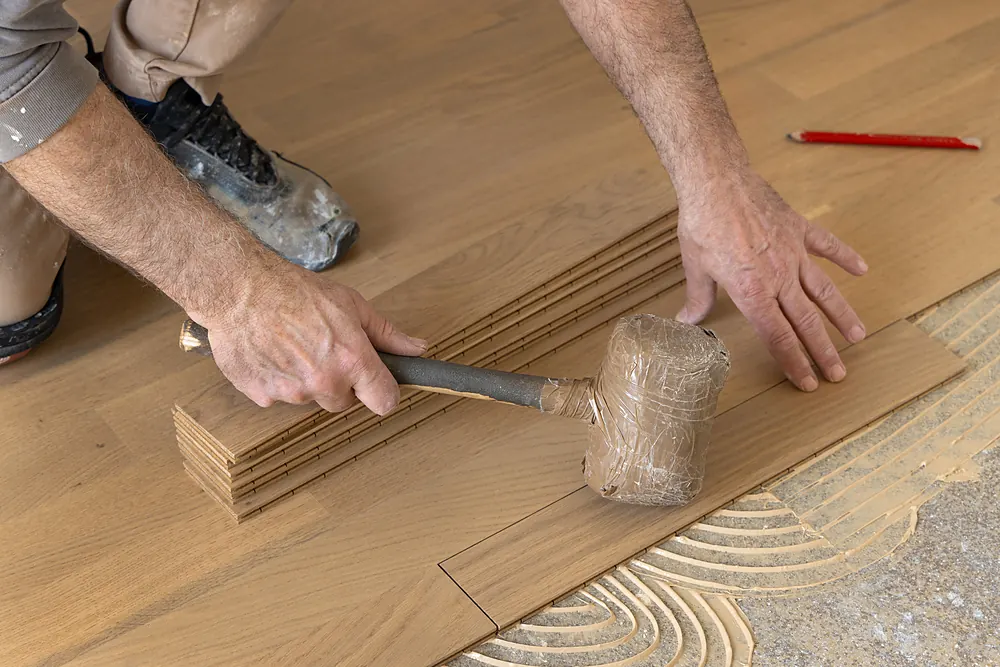
Refinishing takes a floor back to bare wood. Our drum and belt sanders connect to HEPA containment and step through the full abrasive sequence. Topcoats come from three families: two-component waterborne, oil-modified polyurethane, and hardwax oil. They differ in hardness, odor, and cure time.

Our wood floor installation follows National Wood Flooring Association (NWFA) guidelines. We read the wood and subfloor with pin and pinless moisture meters, confirm both meet the manufacturer’s specification, and flatten the subfloor to within 1/4 inch over 10 feet for nail-down. ASTM F2170 testing reads moisture inside a concrete slab. Solid nail-down floors go in with cleat and staple nailers, and where seasonal movement matters most we specify quartersawn and riftsawn stock.
We serve Brandon, Harrisburg, Tea, and other communities across Minnehaha and Lincoln Counties. A seven-month heating season pulls moisture out of wood, so we specify, install, and finish floors for a South Dakota winter, with moisture readings and pricing in writing before work starts. Call today for an estimate.

Get A Free Estimate

Why Choose Sioux Falls Hardwood Flooring as Your Local Hardwood Flooring Contractor

  • Sioux Falls Hardwood Flooring is a local company with 15 years in business. We carry the insurance and bonding applicable to our work and can provide documentation on request. We provide free estimates and offer financing for larger projects.
  • We test the flooring and the subfloor against the manufacturer’s requirements and those of the National Wood Flooring Association (NWFA), and read concrete slabs to ASTM F2170, the in-slab humidity test, before anything is glued down. On planks 3 inches and wider we keep the wood within 2 percent of the subfloor’s own reading, and we leave both numbers with you.
  • The subfloor is brought flat before boards go down, never corrected underneath them afterward.
  • We match species, cut, and flooring format to the room and to the way the house is heated, specifying quartersawn white oak or riftsawn oak where seasonal movement matters most.
  • Every sander connects to HEPA-filtered dust extraction, and plastic containment helps keep airborne dust outside occupied rooms.
  • Repairs are woven into the surrounding floor rather than patched over it.
  • You receive a fixed-price, itemized proposal in writing before any work begins.

Call (605) 799-9142 for a free on-site estimate, or request one online.

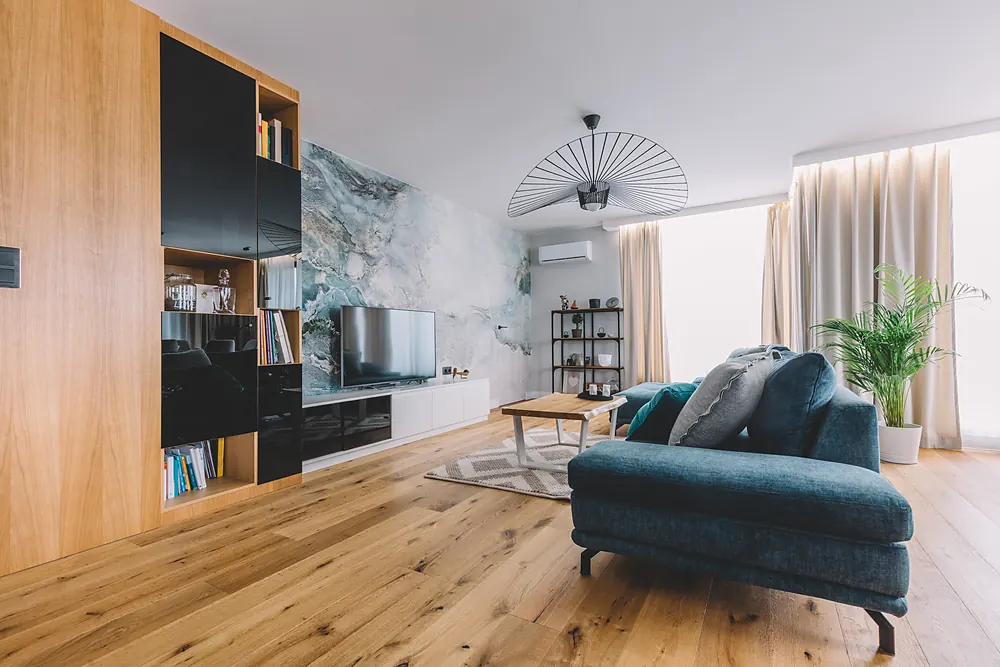
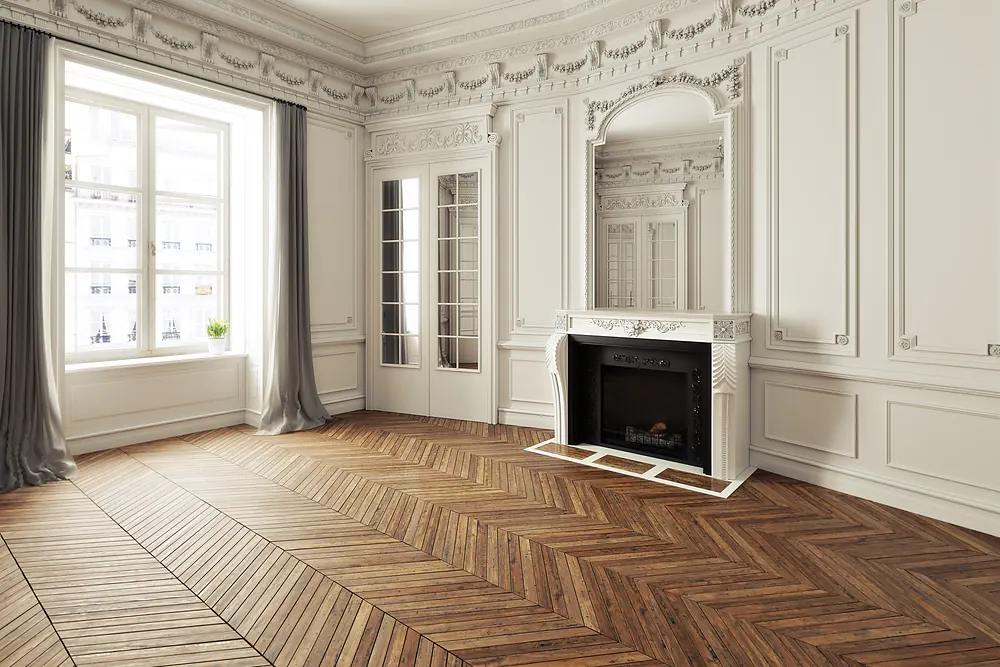
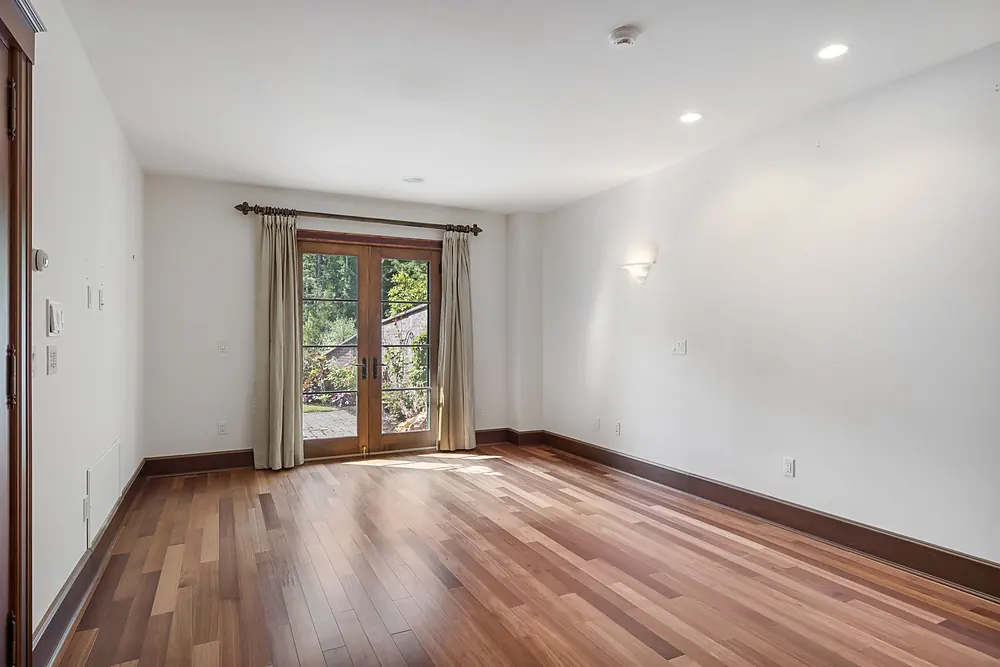
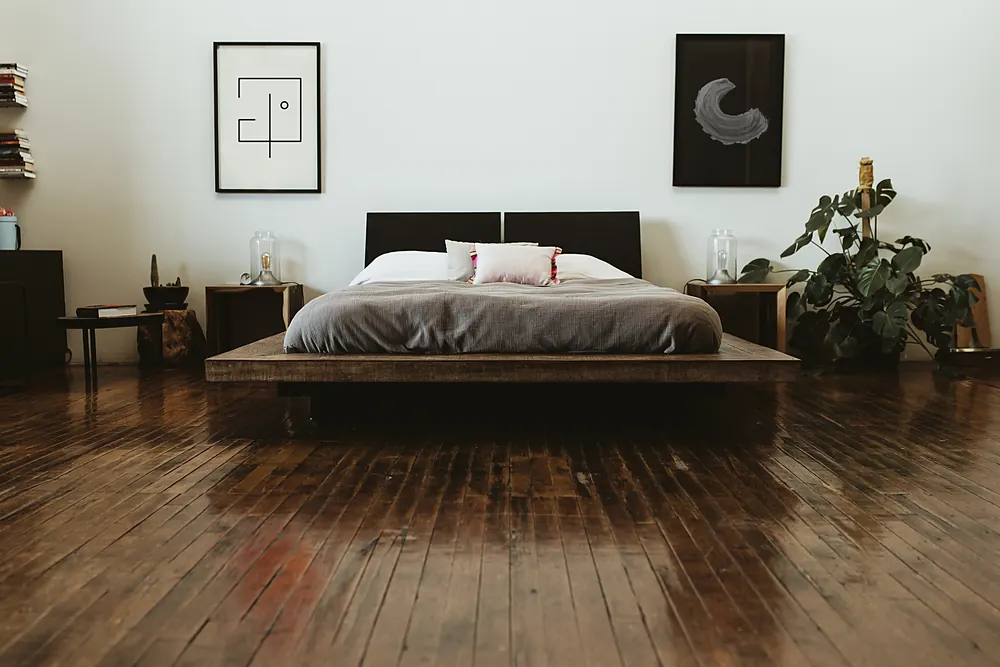
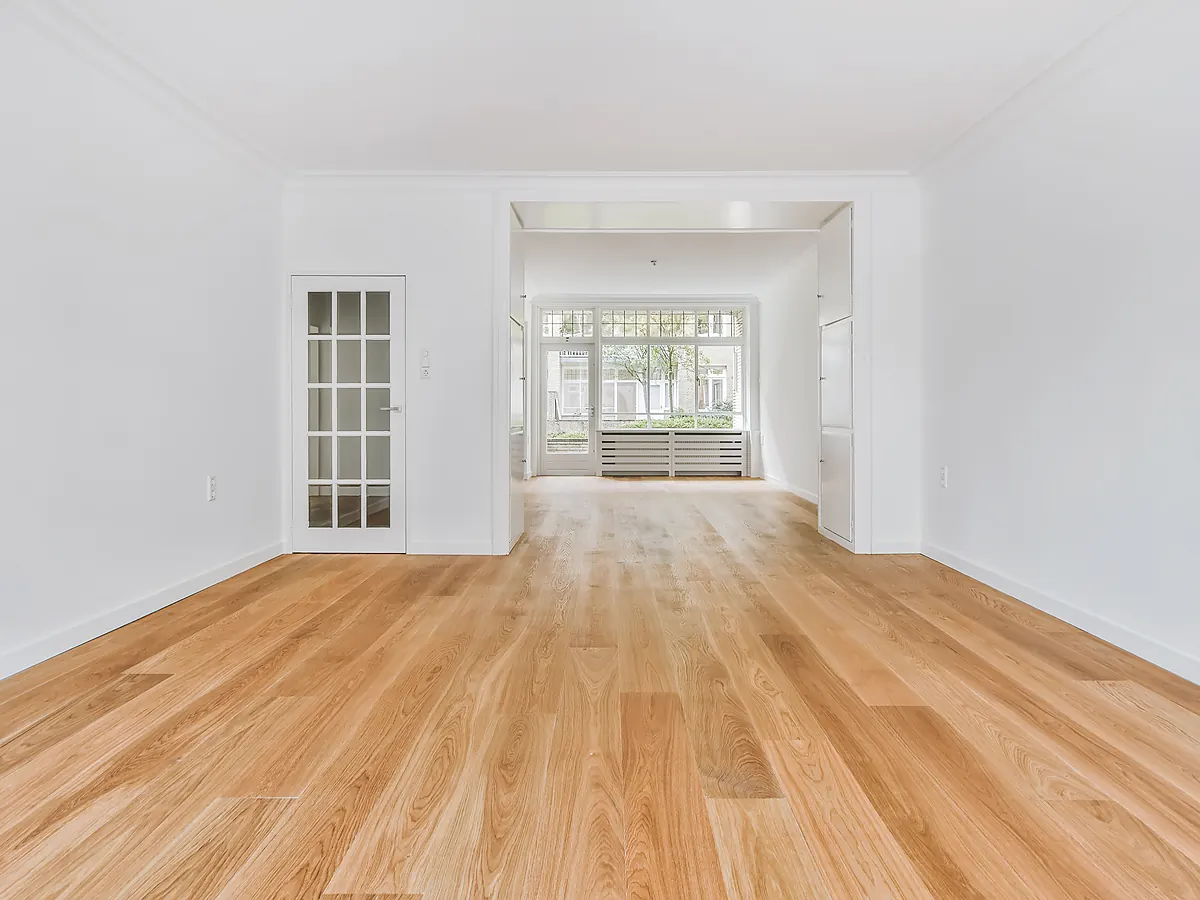
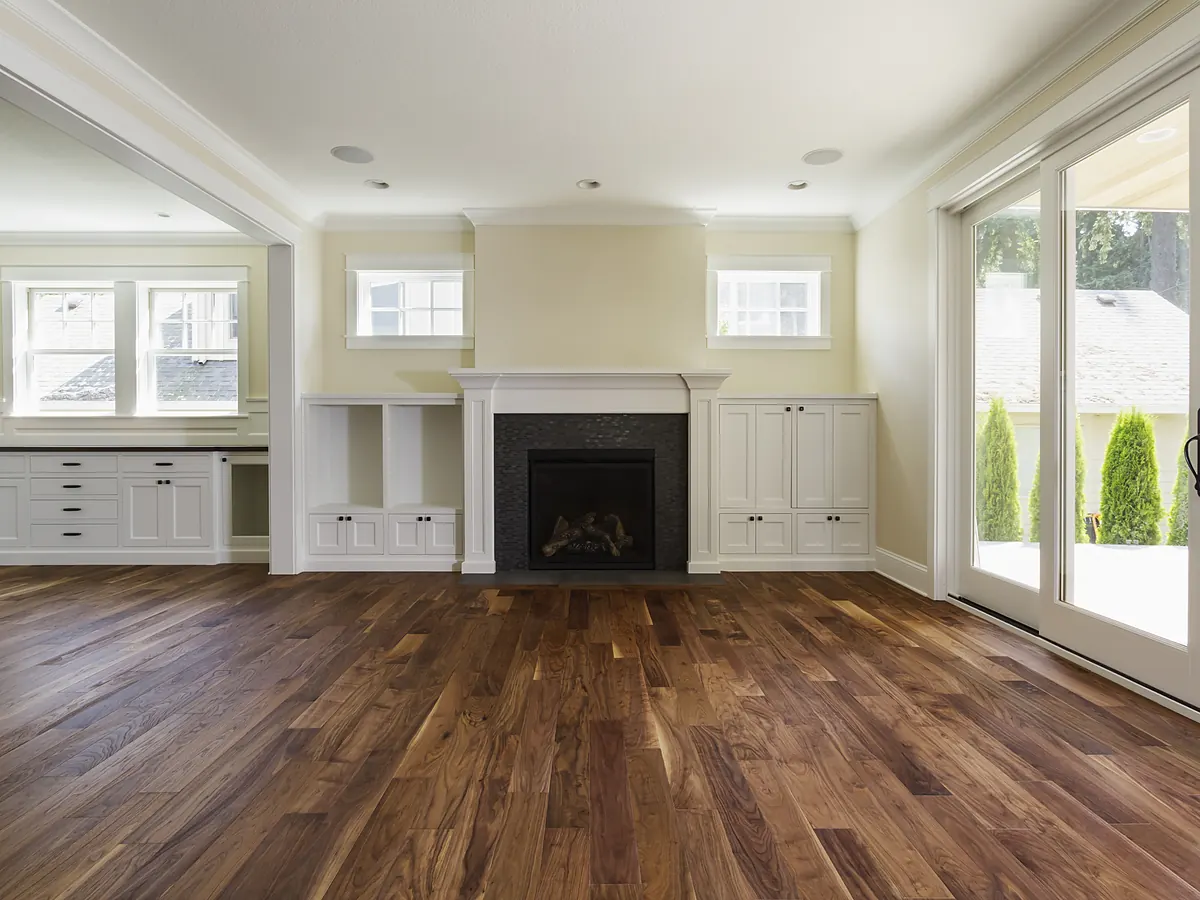
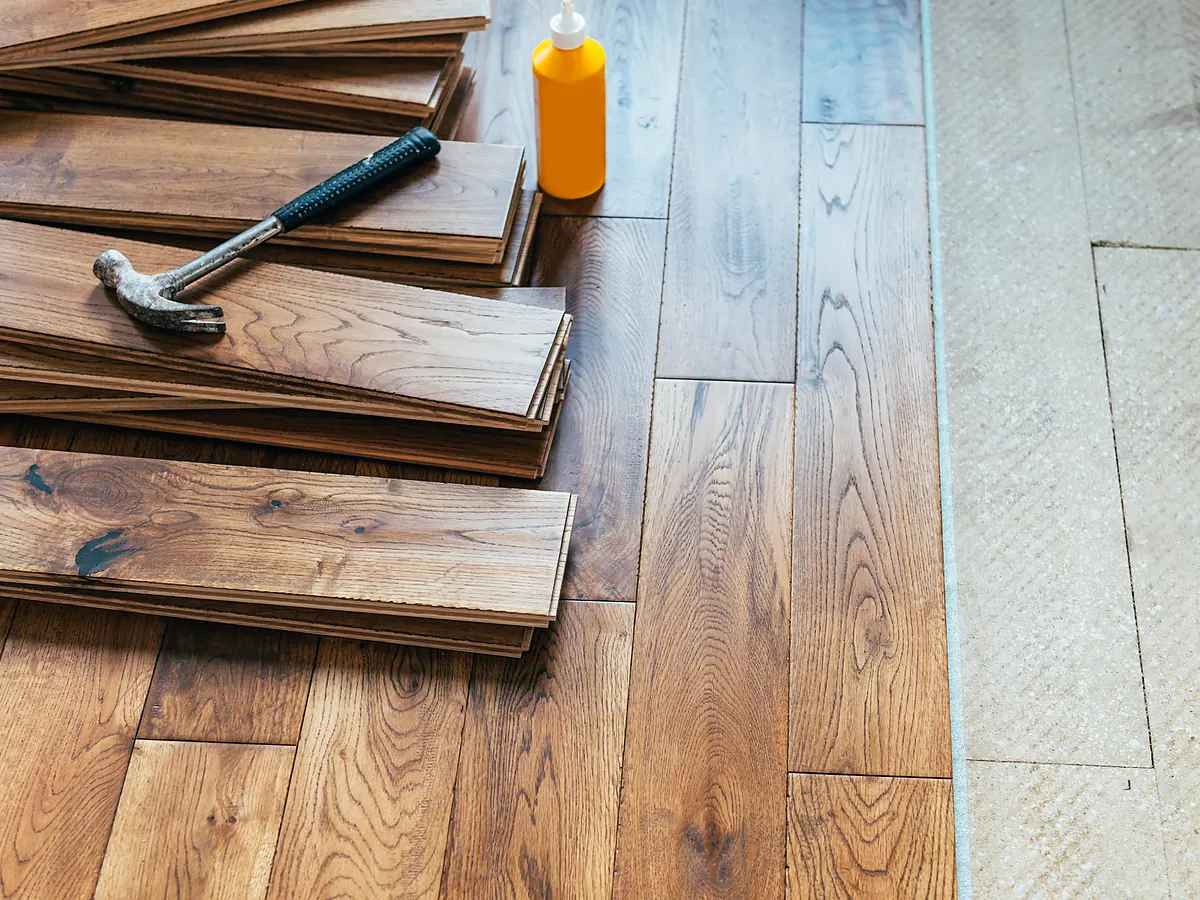
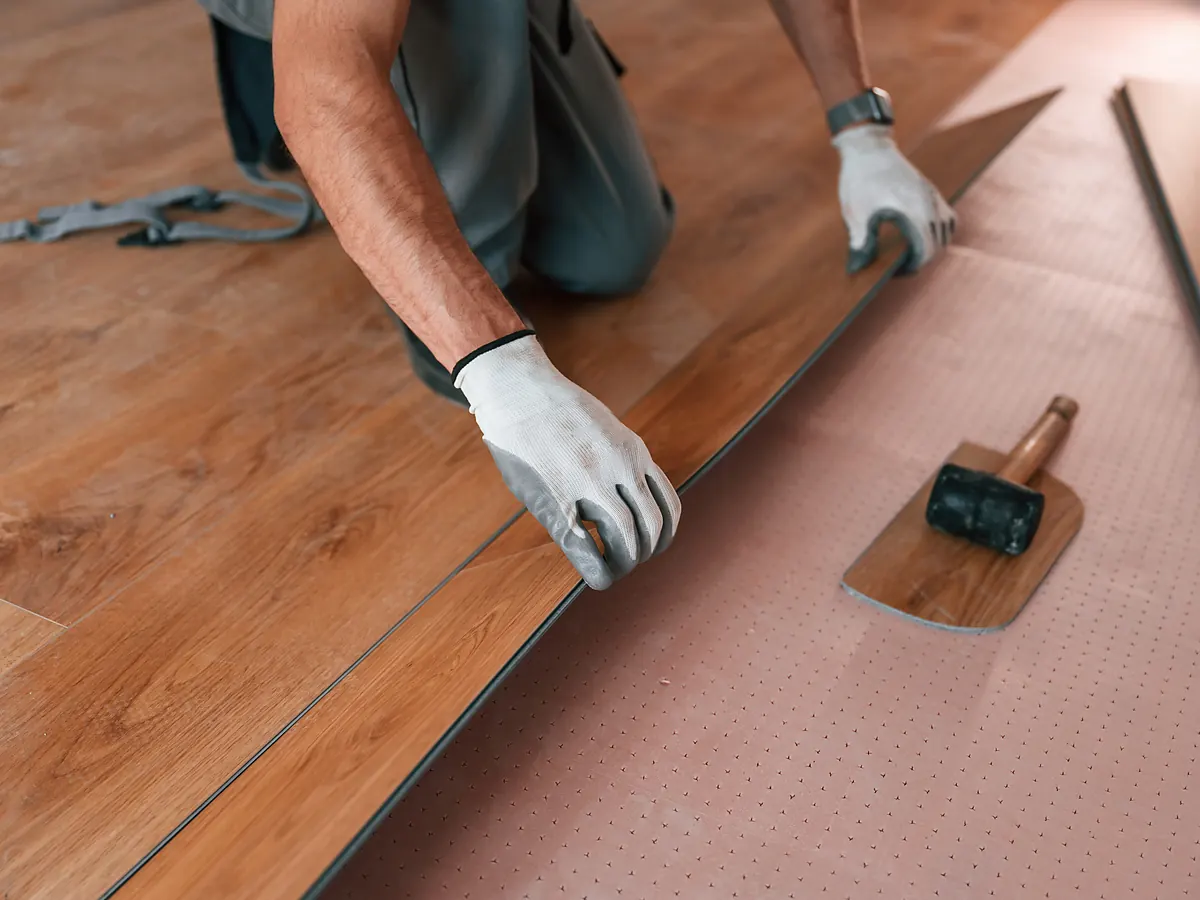
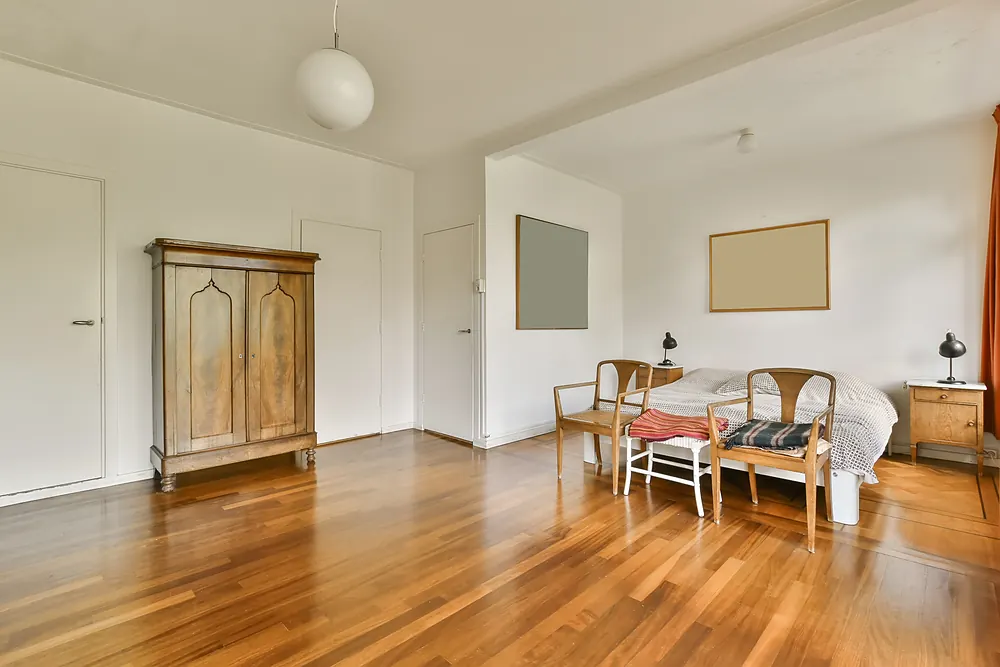
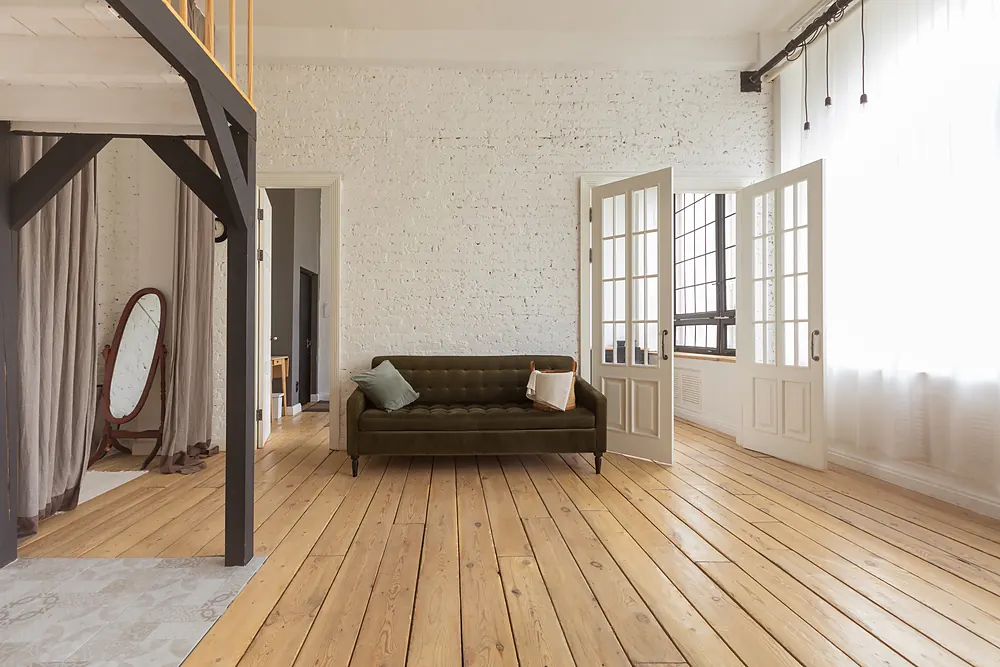
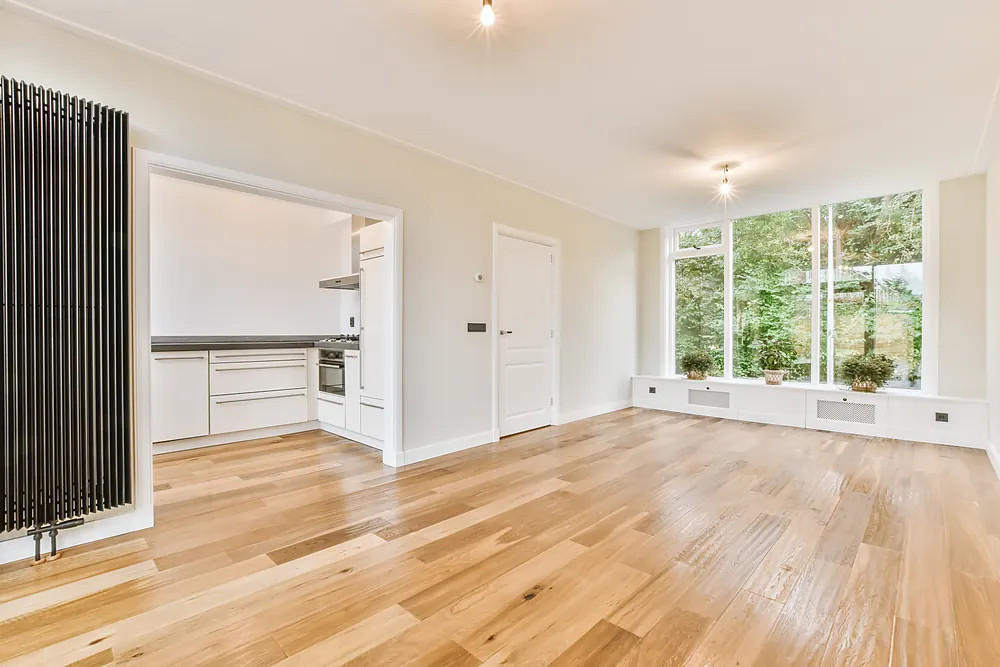
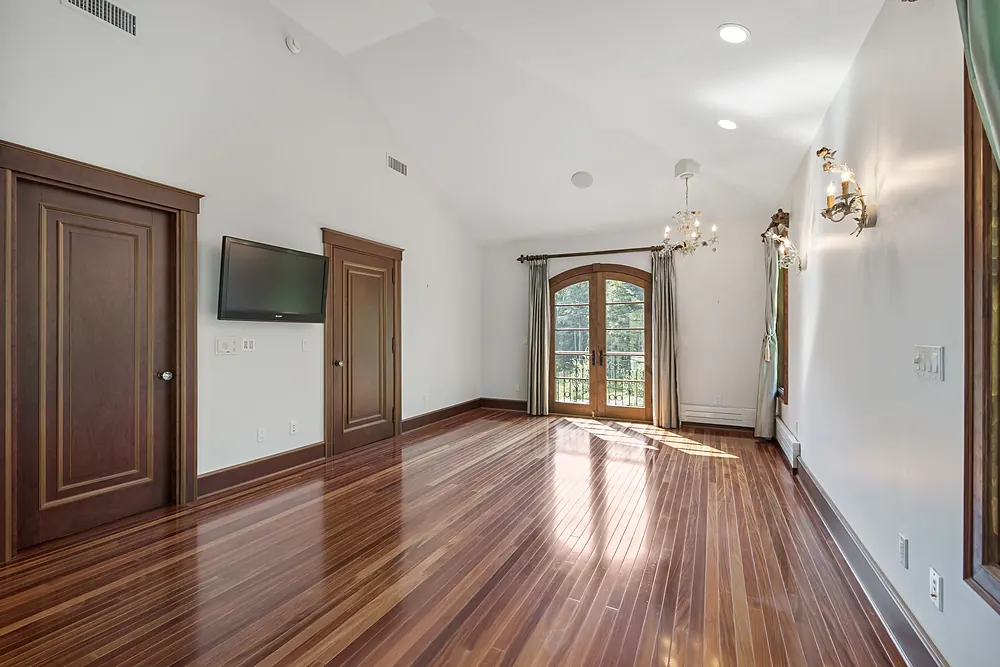
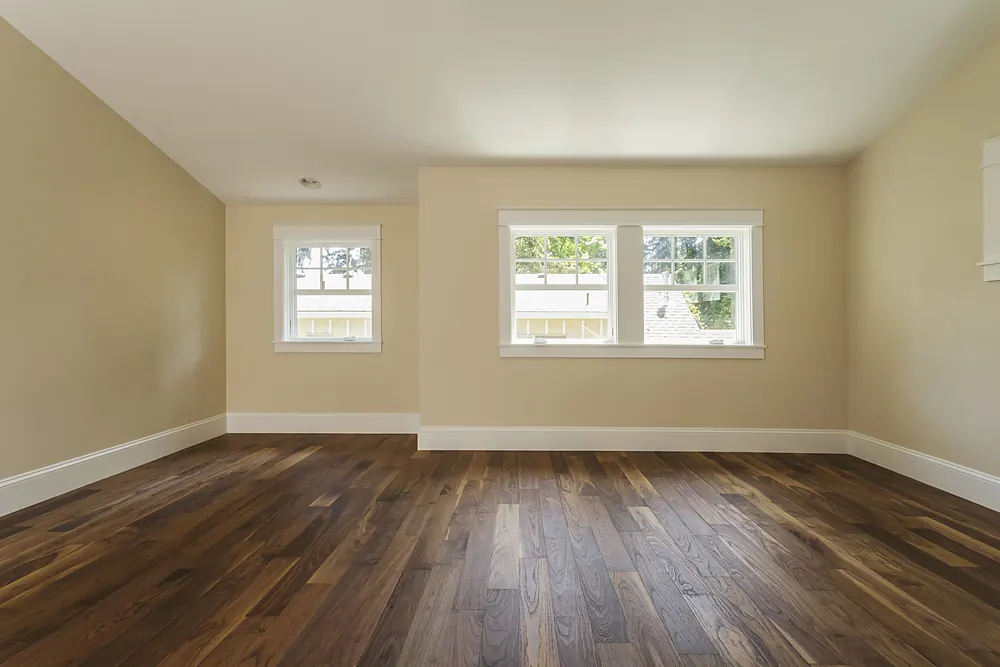
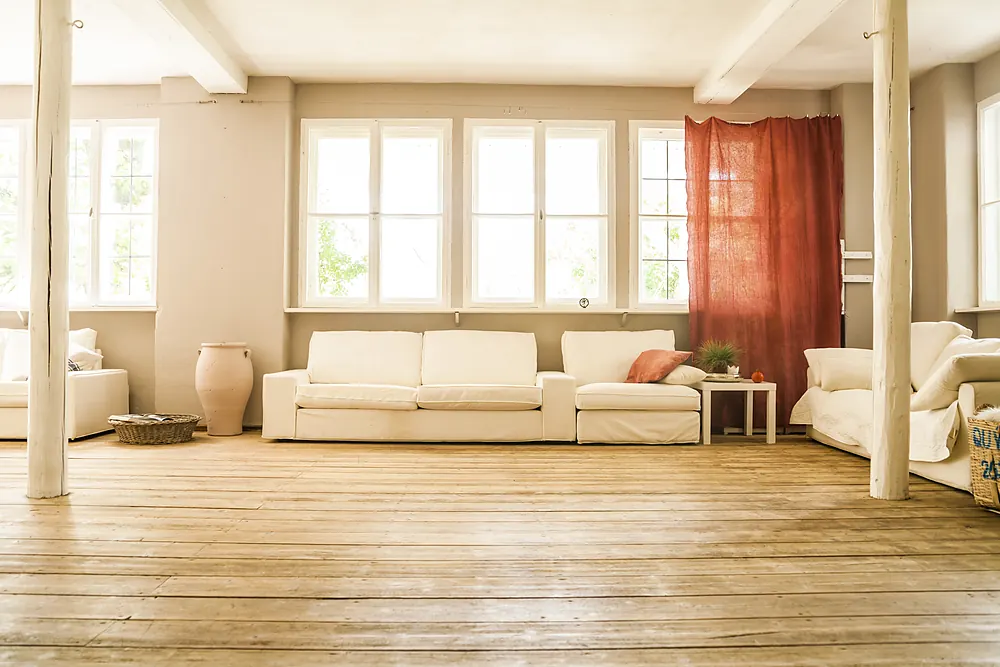
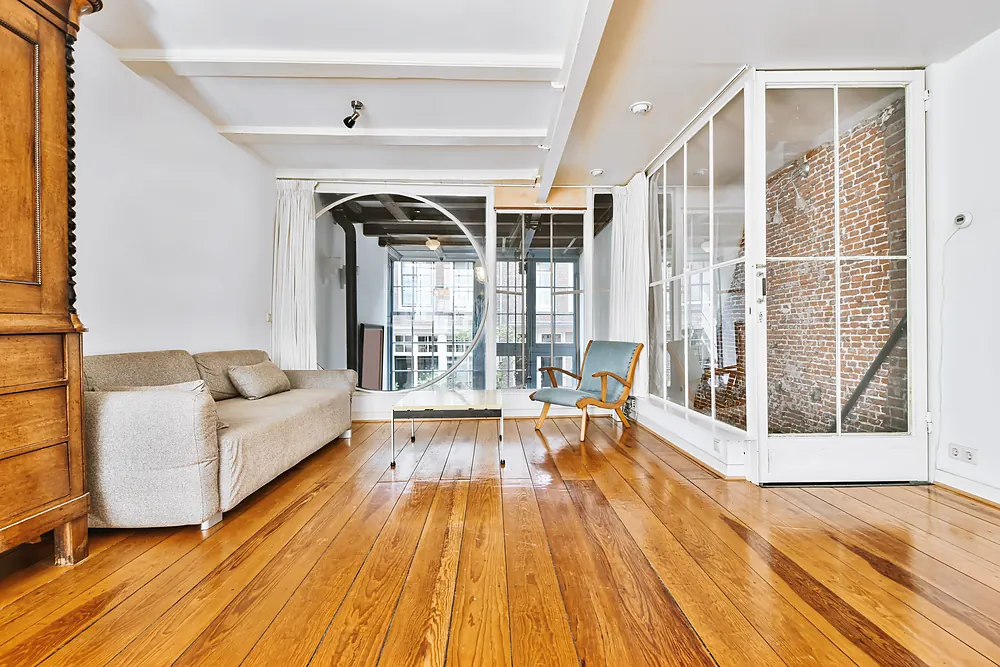
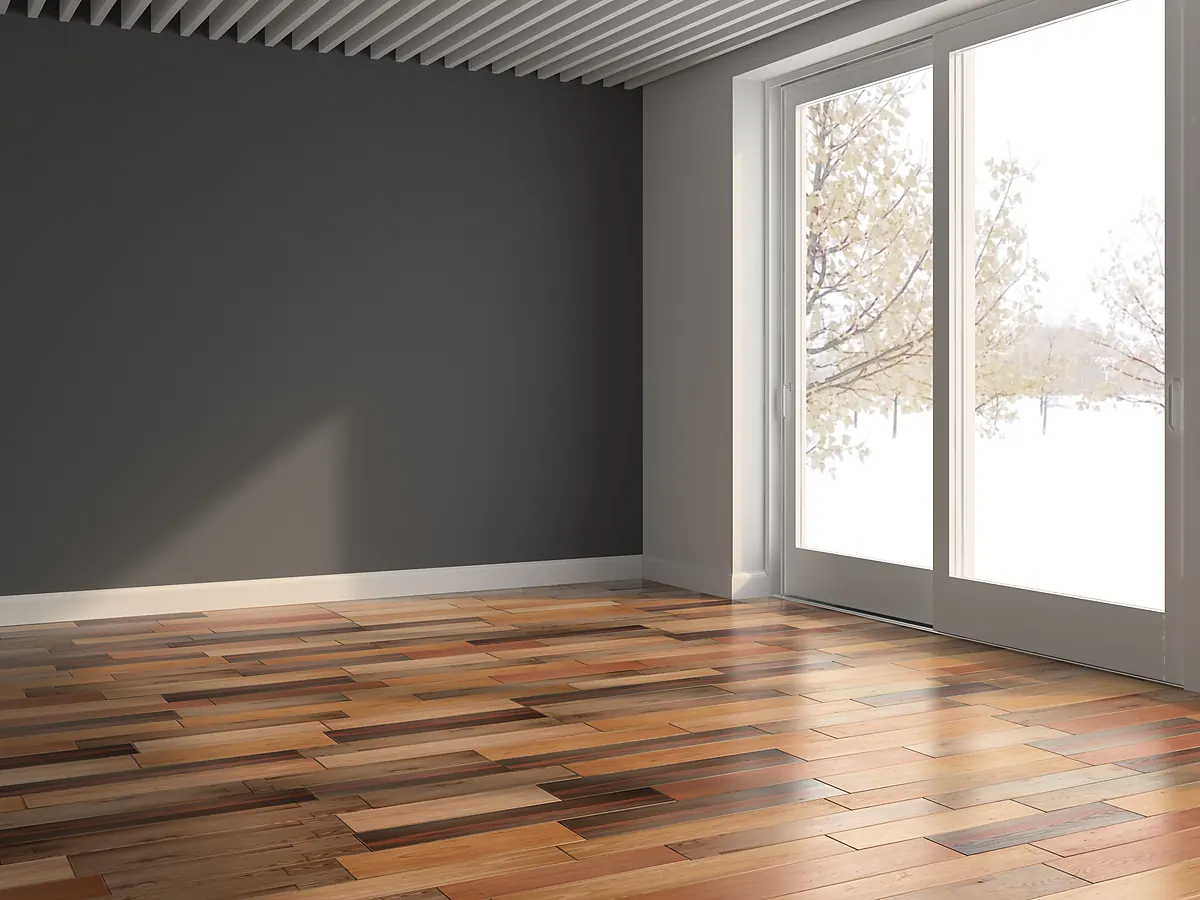
Light oak wide-plank hardwood floor in a modern Sioux Falls, SD living room Herringbone hardwood floor in a formal parlor Warm cherry-toned hardwood floor in an empty room with french doors Dark-stained hardwood floor in a Sioux Falls, SD bedroom

Hardwood Floor Installation Services in Sioux Falls, SD

Whether a hardwood floor lasts is largely settled before anyone opens a box of it. Reading moisture, flattening the subfloor, and staging delivery decide more than the boards do. What is left is set by the product itself, which specifies the fastening method and the underlayment.

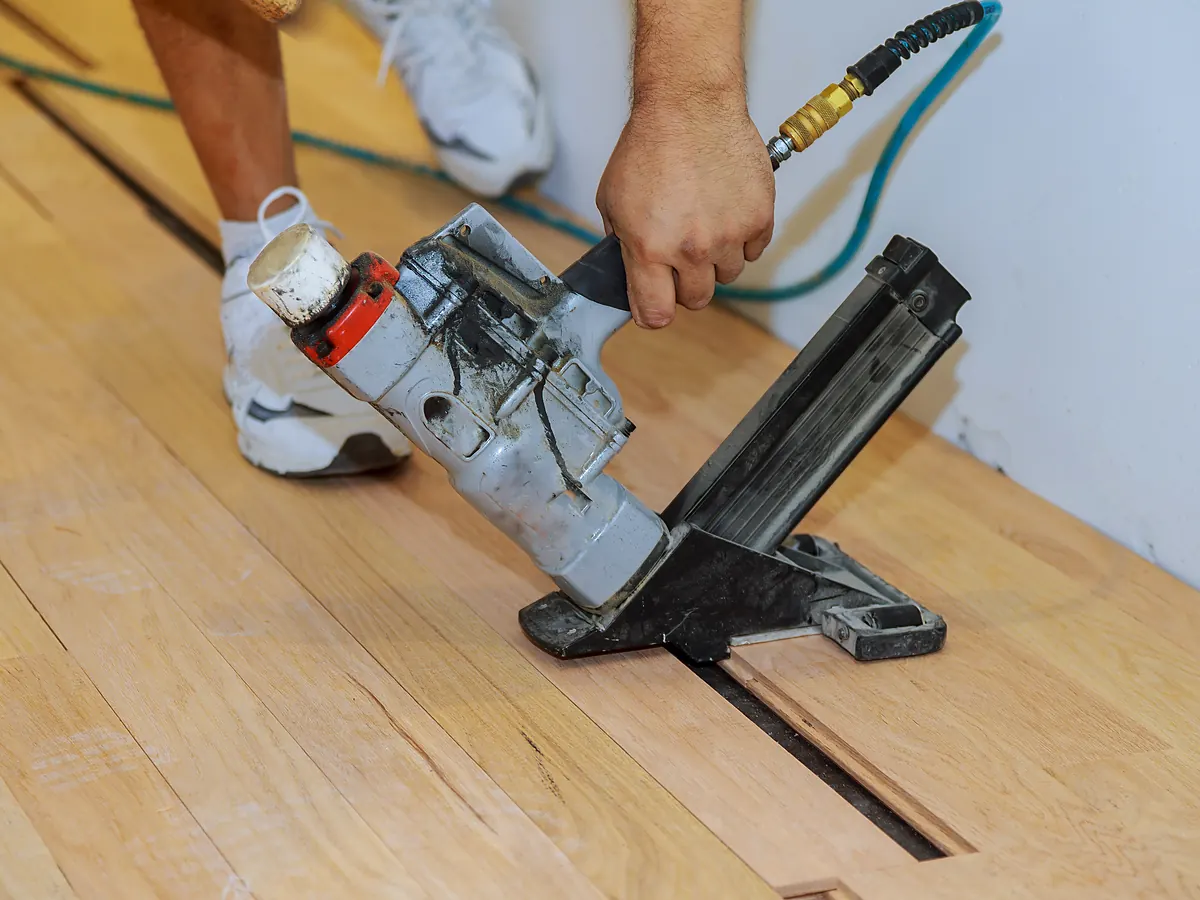
Pneumatic flooring nailer fastening solid hardwood boards to a wood subfloor in Sioux Falls, SD

Solid Hardwood Floor Installation

We install solid hardwood over an approved wood subfloor using a nail-down system. The finished floor sits nearly an inch above the subfloor, so door bottoms, appliance clearances, and transitions to tile are settled before the boards go in.

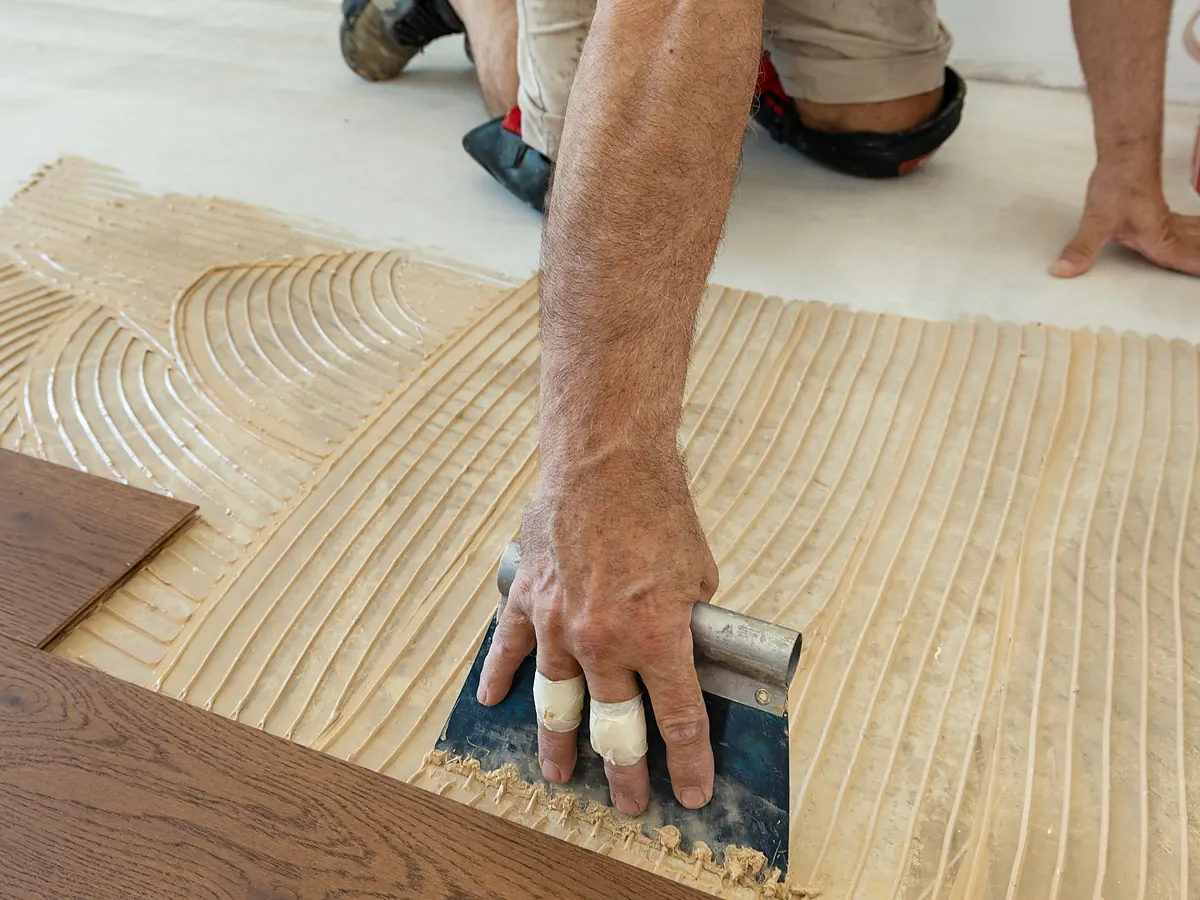
Notched trowel spreading adhesive for an engineered hardwood glue-down over a concrete slab in Sioux Falls, SD

Engineered Hardwood Floor Installation

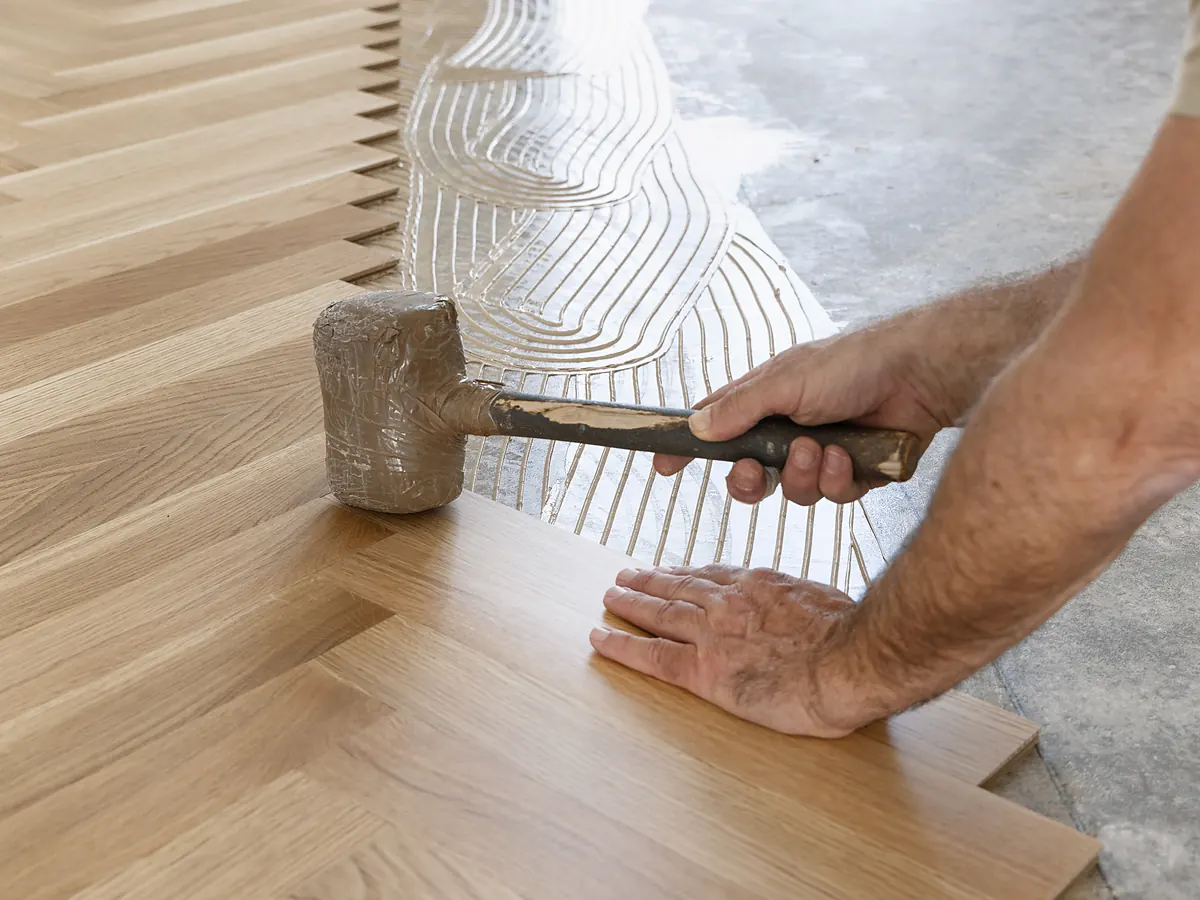
We glue down, nail down, or float engineered hardwood depending on the substrate and what the product calls for. Over a slab the glue-down goes in once ASTM F2170 testing clears it, and the adhesive and any underlayment are specified to the manufacturer’s requirement rather than to habit.

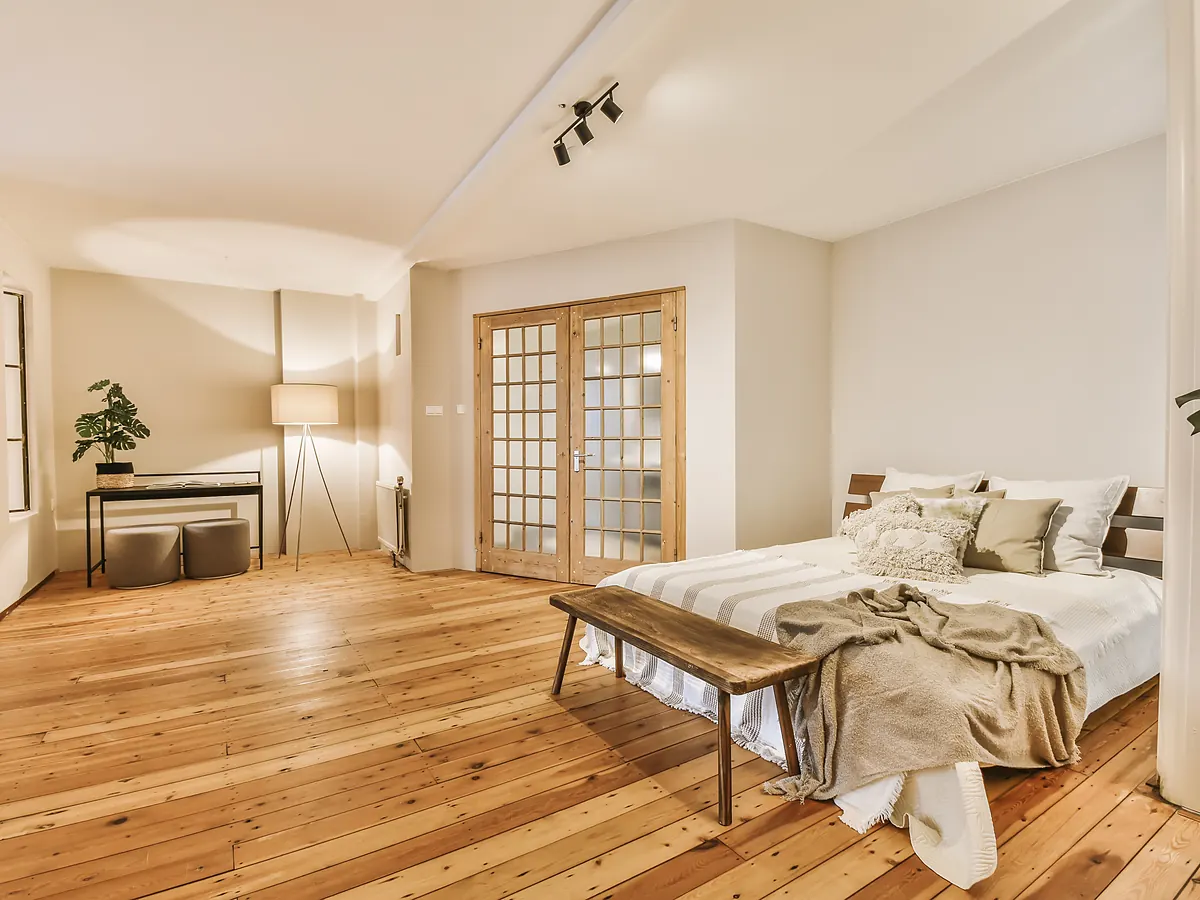
Warm wide-plank hardwood floor in a Sioux Falls, SD bedroom after a carpet-to-hardwood conversion

Carpet-to-Hardwood Conversion

Conversion starts with complete removal of the carpet, pad, tack strips, and embedded staples, which opens the base up for inspection. We screw down panels that move and fit transition thresholds at each doorway. Old-growth boards sometimes survive underneath and are worth restoring instead.

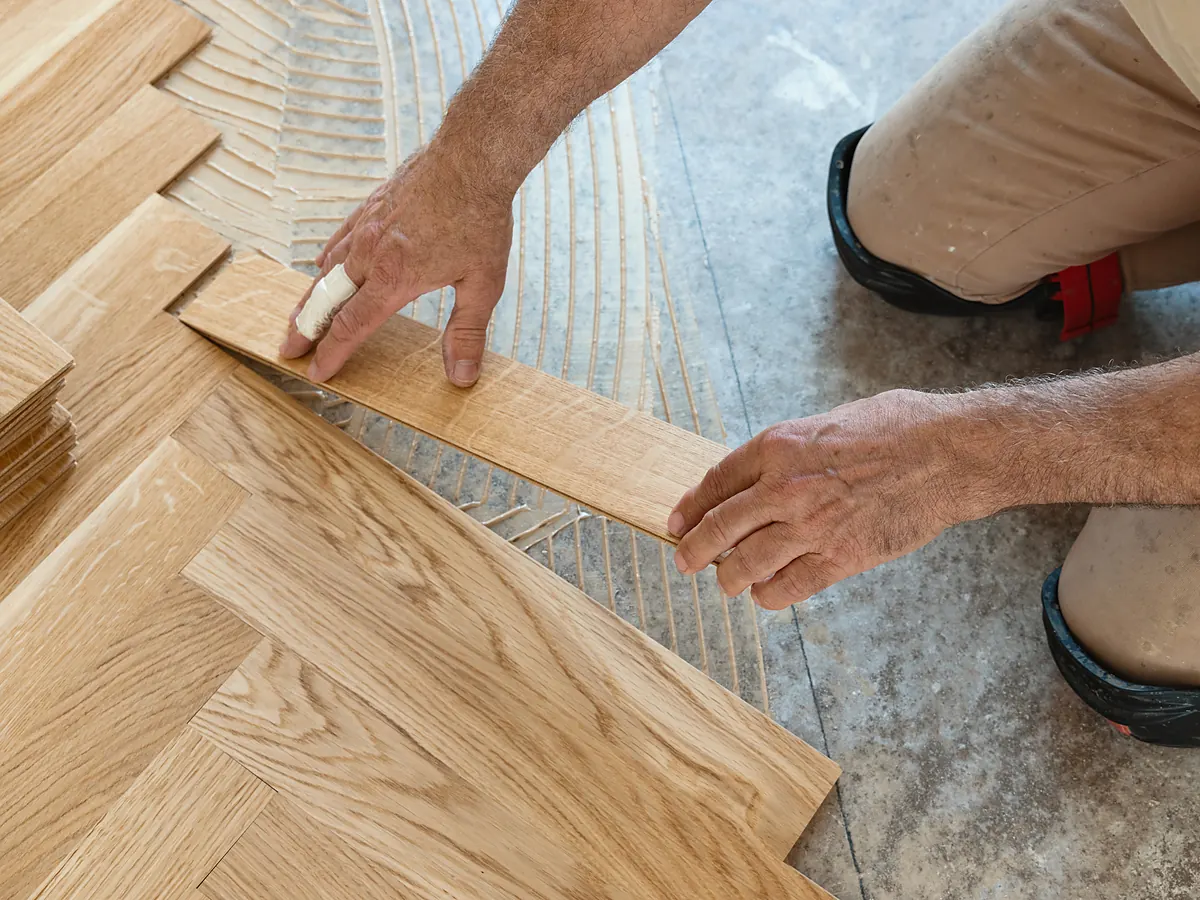
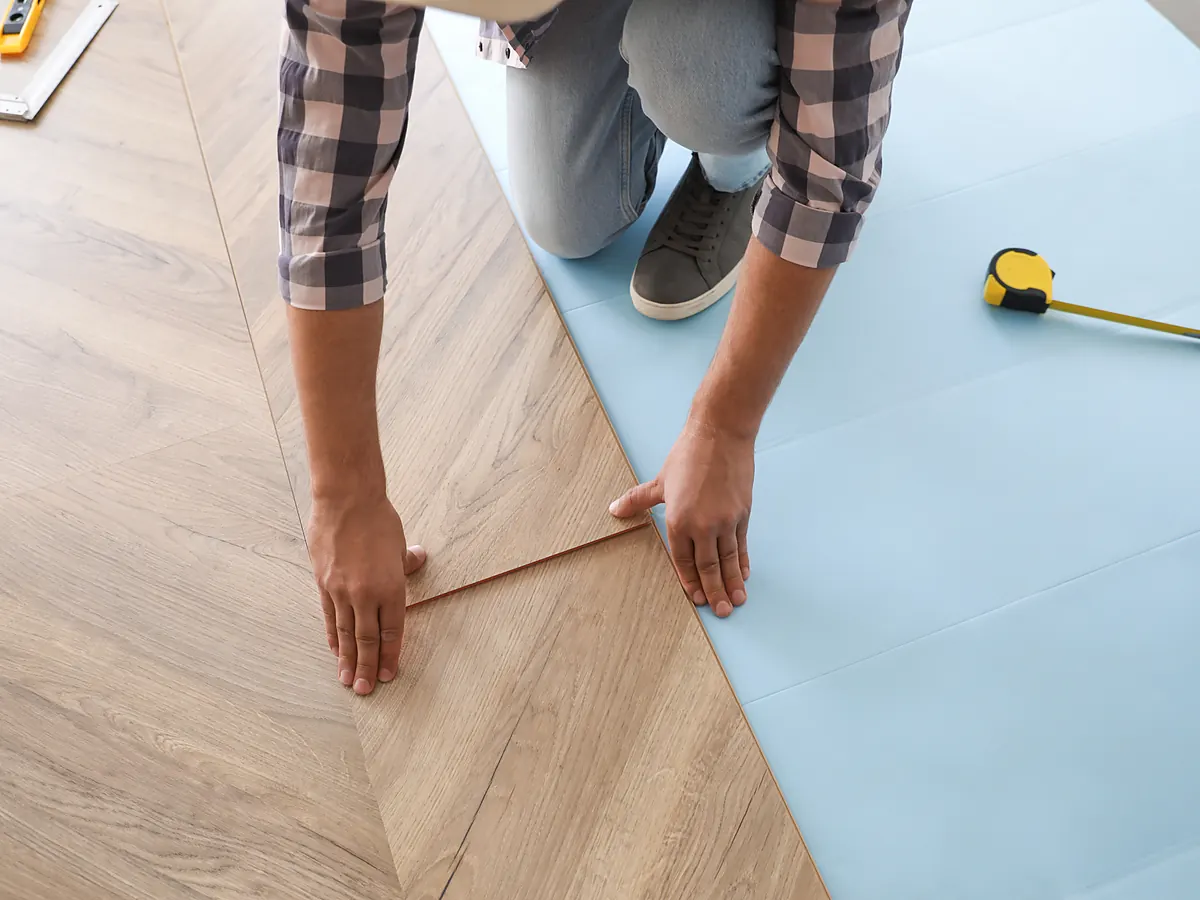
Installer laying an oak herringbone hardwood floor pattern in a Sioux Falls, SD home

Custom Wood Floor Installation

Every pattern starts from a line snapped down the center of the room, so it lands balanced at both walls rather than running out short at one of them. Herringbone sets rectangular boards at 90 degrees in a staggered zigzag; chevron mitres the board ends to a point so each row meets in a continuous V. Borders and medallions are cut and fitted on site to the room’s own dimensions. Pattern work is priced separately.

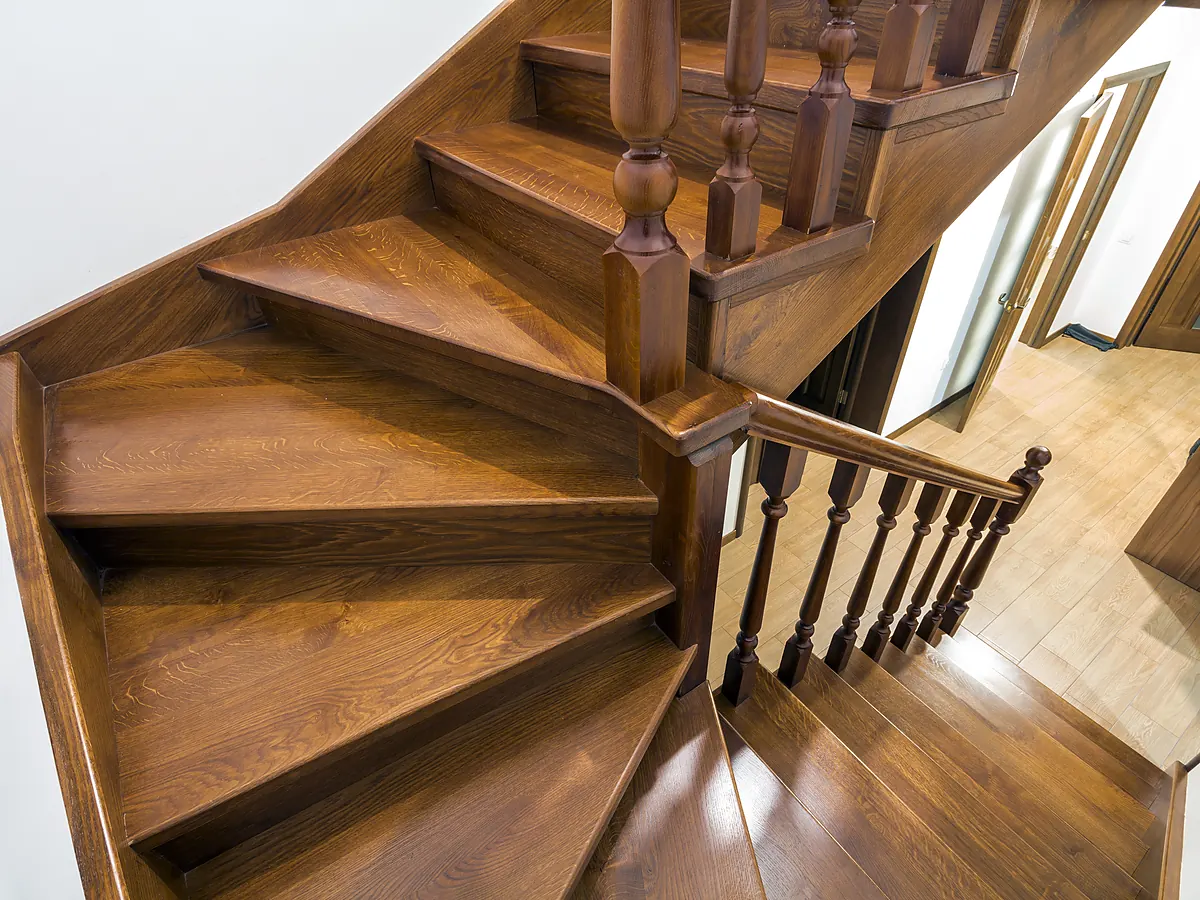
Refinished oak stair treads and risers meeting the hardwood floor at the landing in a Sioux Falls, SD home

Hardwood Stair Installation and Refinishing

Stairs are hand-sanded, because a floor machine cannot reach corners, edges, or nosings. We fit tread and riser stock to each step and match stain and sheen to the floor at the landing. Stair rates are published with the rest of our pricing.

Hardwood Floor Refinishing and Restoration Across Minnehaha and Lincoln Counties

Hardwood floor refinishing takes worn coatings and old stain back to bare wood, which is what makes a full color change possible. It is the middle of three options. Lighter is a screen-and-recoat, for a finish that is dull but sound. Heavier is a full restoration, for structural damage or too little wood left to sand. Working out which of the three a floor needs comes first, because a maintenance coat over a floor that needed sanding will not last.

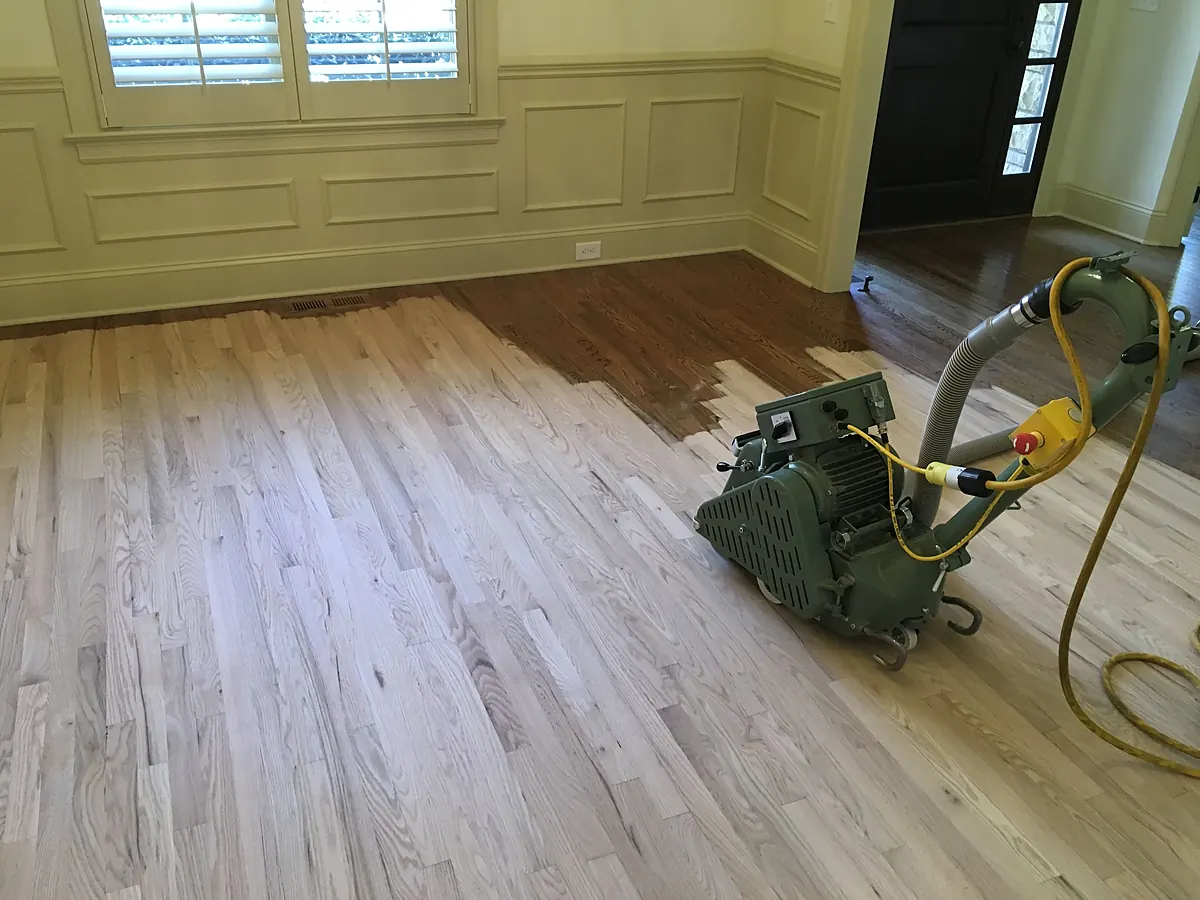
Drum sander taking a hardwood floor back to bare wood during a dustless refinish in Sioux Falls, SD

Dustless Sanding and Refinishing

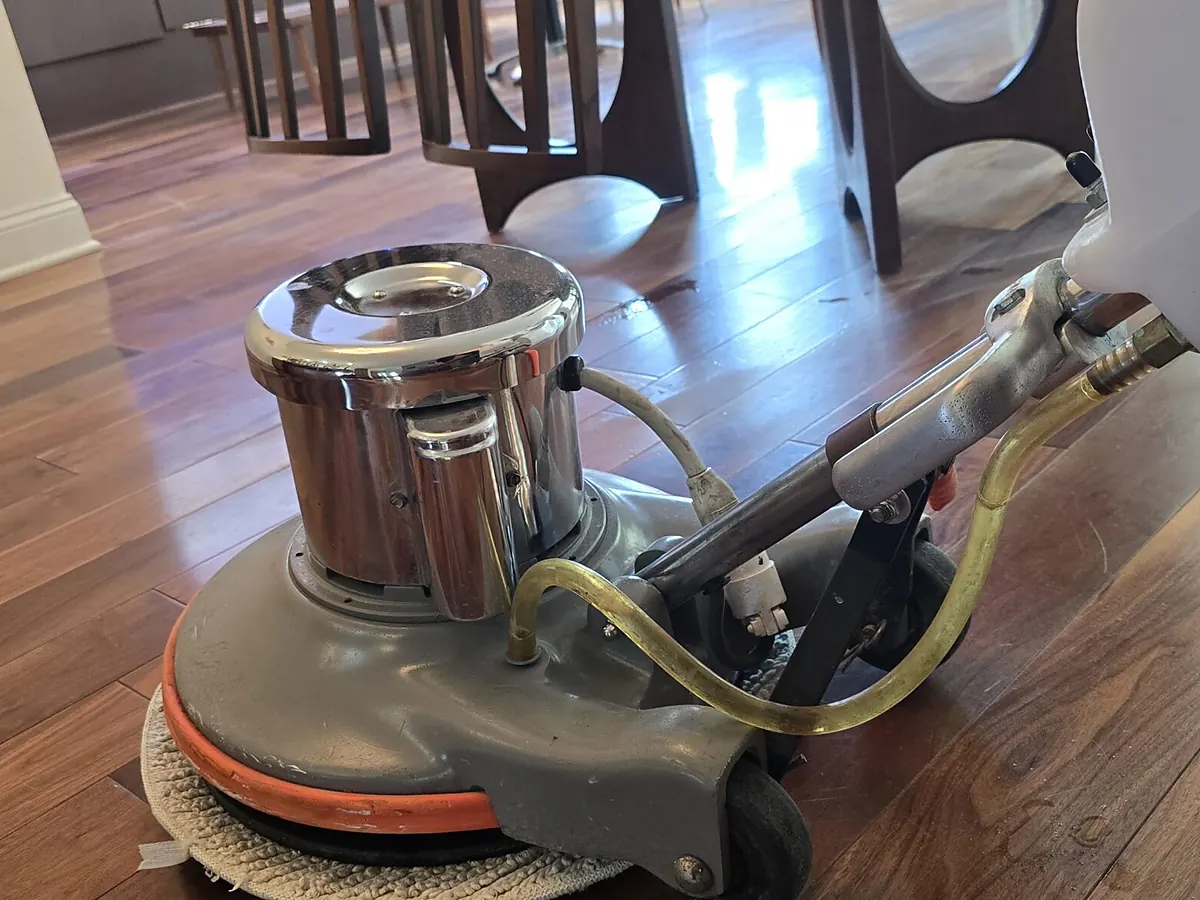
A standard refinish takes the floor back to bare wood and lays two coats in the wood’s natural color, across 2 to 4 days on site. We run both drum and belt machines, stepping through every abrasive grade without skipping one, because a missed grade leaves scratches that stain will darken and expose. Every sander runs on HEPA-filtered dust extraction, so dust control is standard rather than an upcharge.

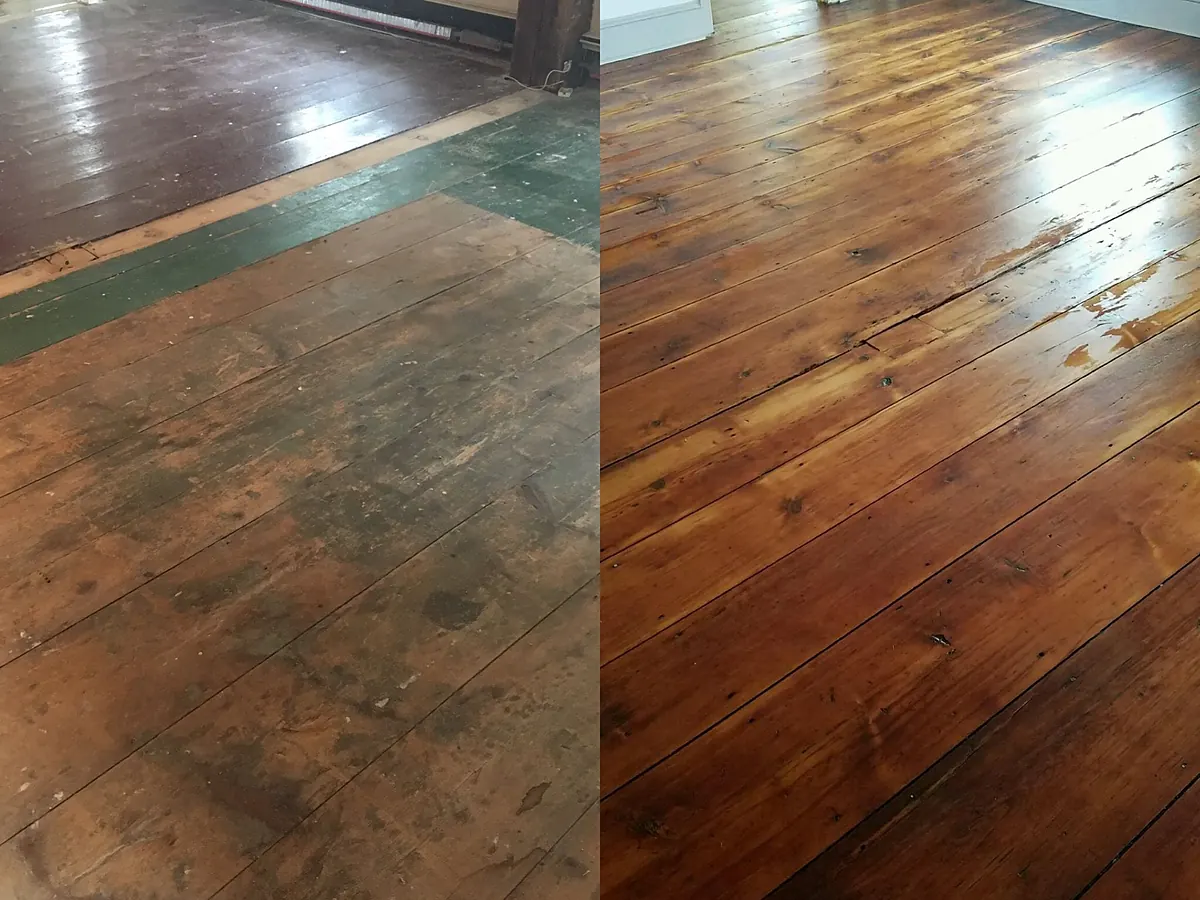
Historic hardwood floor before and after restoration, worn and painted boards beside refinished wood

Historic Hardwood Floor Restoration

Restoration recovers a floor whose wear, past sanding, and structural defects go beyond what a coating can fix. We measure the wood left to work with first, so thin historic floors are preserved rather than sanded away, and matching stock may mean old-growth oak in the original width and cut.

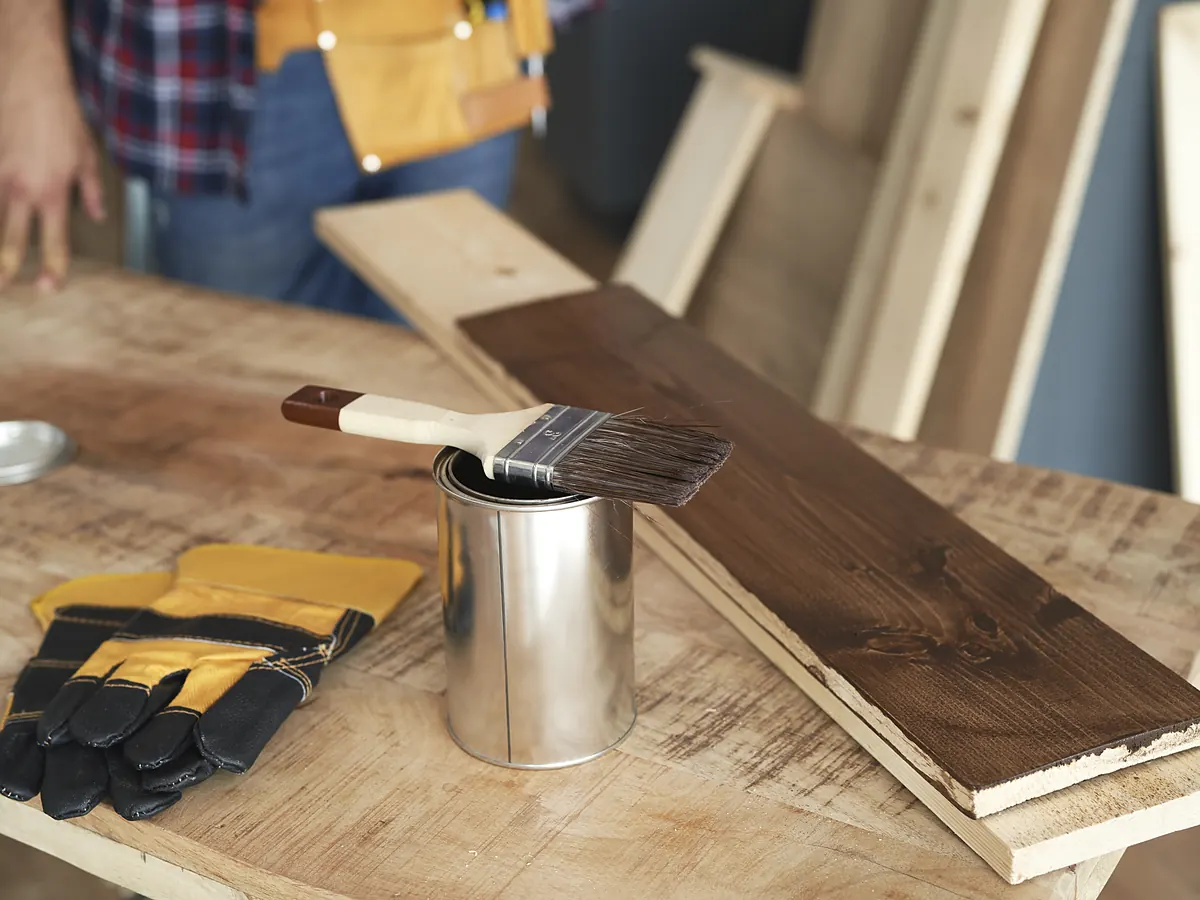
Stain sample board and brush used to match hardwood floor color in Sioux Falls, SD

Hardwood Floor Staining and Color Matching

Color is confirmed on a sample board laid on your own floor before any of it goes down. We stain in DuraSeal and Minwax colors, from Natural and Early American through Jacobean, Classic Gray, and Ebony. Oak takes color evenly. Maple and birch usually need a conditioner first, or the stain goes blotchy.

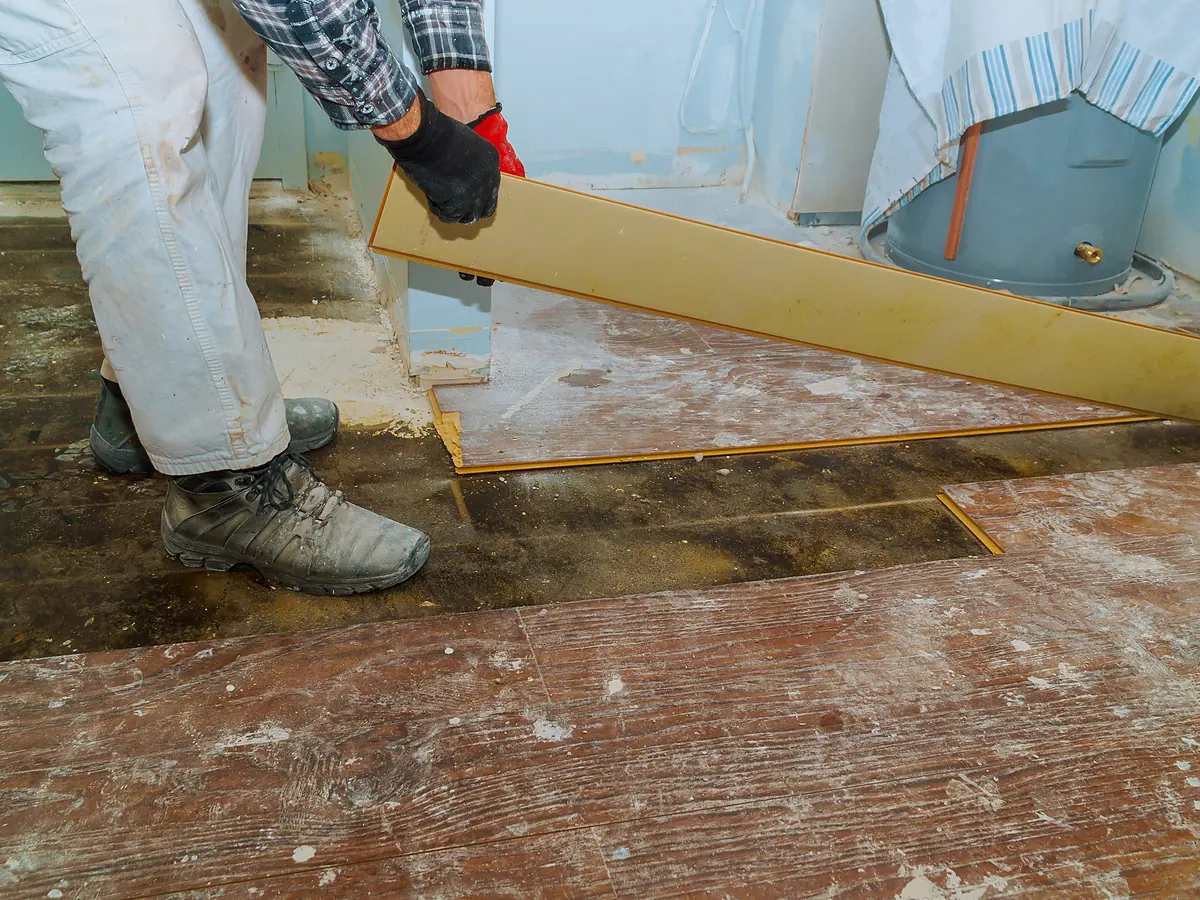
Water-damaged hardwood boards lifted to dry the structure before repair in Sioux Falls, SD

Water-Damage Hardwood Floor Repair

Repair starts with reading the distortion and drying the structure. Cupped boards have raised edges, crowned boards rise through the center, and the two call for different timing. We wait until the wood has dried back to what the rest of the floor holds.

Screen-fitted buffer scuffing the old finish during a hardwood floor screen and recoat in Sioux Falls, SD

Hardwood Floor Screen and Recoat

A screen and recoat is the maintenance option for floors with a sound finish and light surface wear. It does not remove deep damage or change the stain color. A screen-fitted buffer scuffs the old finish, one compatible topcoat goes on, and many waterborne systems permit limited use the following day.

Replacement hardwood plank laced into an existing floor during a board repair in Sioux Falls, SD

Hardwood Floor Repair and Board Replacement

Repair handles localized squeaks, loose boards, gouges, and small groups of damaged planks without sanding the whole room. Replacement planks are laced in with end joints kept irregular, and grain and cut are matched so the work disappears. Many localized repairs are completed in one visit, depending on material availability and finish matching.

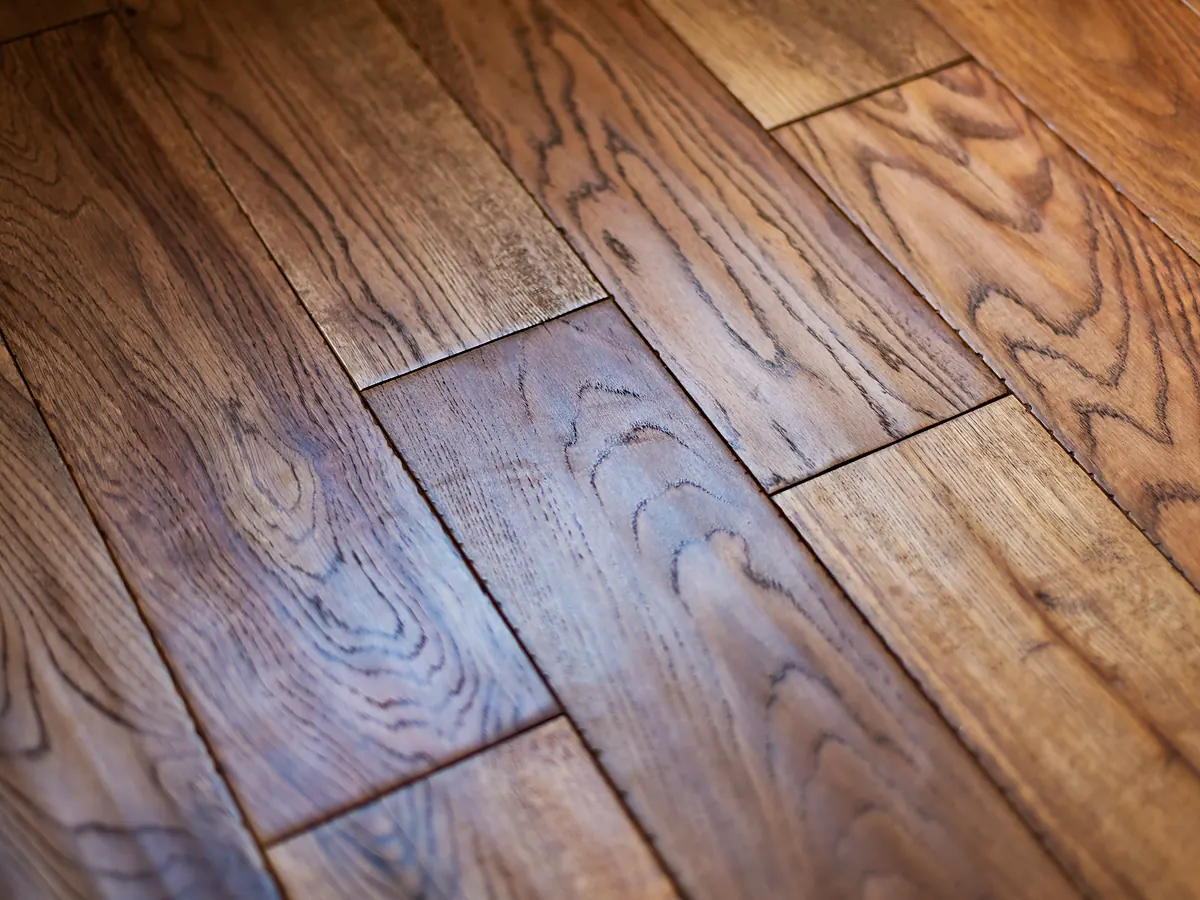
Close-up of a finished hardwood floor showing topcoat sheen across the grain

Finish Systems, Sheen, and Timing

Topcoats come from three families. A two-component waterborne, Bona Traffic HD or Loba 2K Invisible, provides strong wear resistance, low odor, and minimal ambering. Oil-modified polyurethane, DuraSeal on most of our jobs, adds a warm amber cast but cures more slowly and smells stronger. Hardwax oil, Rubio Monocoat or Osmo Polyx, soaks in rather than building a film and spot-repairs without a full recoat.

Sheen is a separate decision: matte scatters light and hides most wear, satin sits in the middle, and semi-gloss is formal and the least forgiving. Dry is not cured. On a typical waterborne system sock traffic is fine at about 24 hours, shoes at 48, and furniture at 72, while rugs stay off until the 7-day cure.

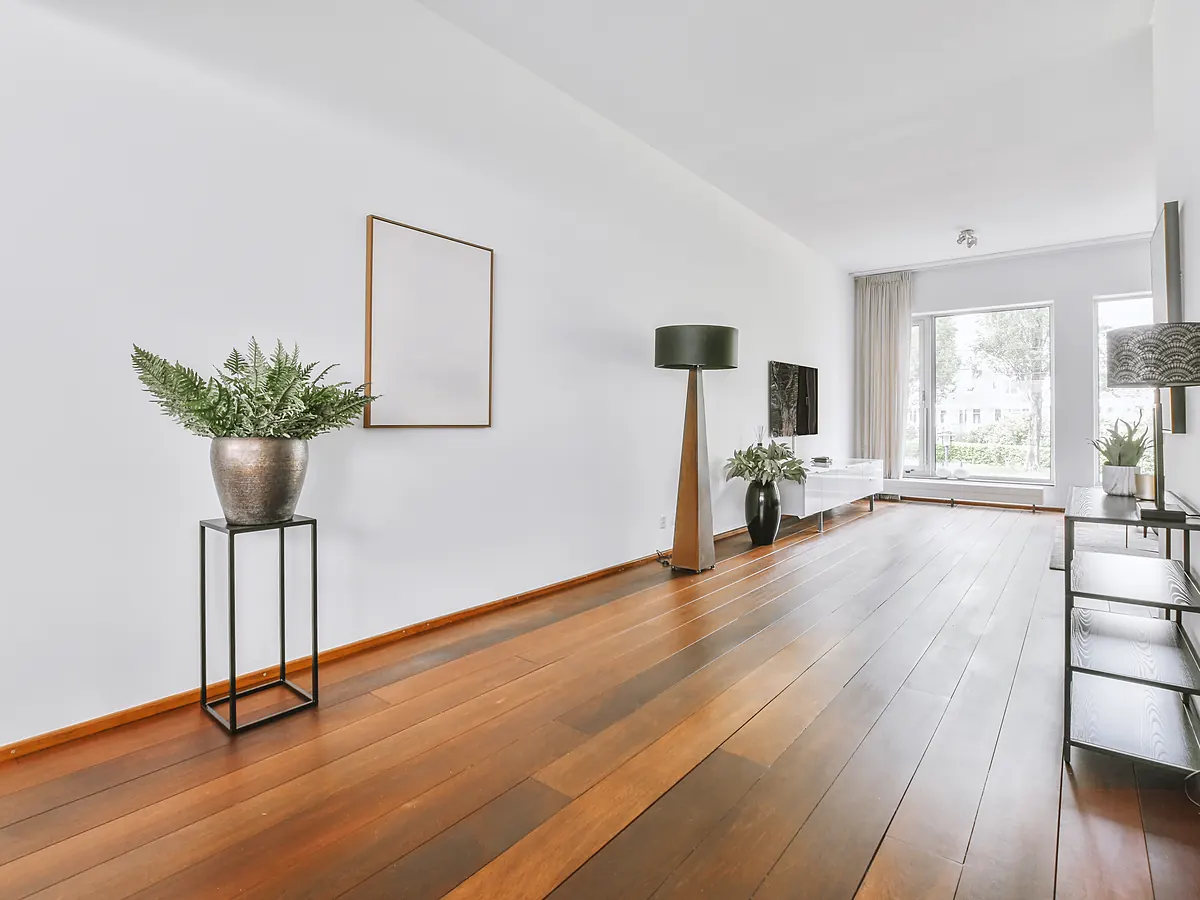
Freshly finished oak hardwood floor running the length of a bright Sioux Falls, SD room Dark-stained hardwood floor in a Sioux Falls, SD living room with a fireplace

What Goes Into a Hardwood Floor Installation

Moisture Testing Before the First Board

Both the flooring and the subfloor get read on the same visit: a pin meter below the surface, a pinless meter across a broader area. There is no single right number, because species, season, climate, and the manufacturer’s specification set it between them, though in this region it commonly lands around 6 to 9 percent. What does not move is the gap between the two, which NWFA caps at 4 percent on narrower boards and 2 percent on planks 3 inches and wider.

Acclimating to the House, Not to the Calendar

Acclimating to equilibrium means letting the flooring reach the moisture conditions of the occupied house, so we establish 60 to 80 F and 30 to 50 percent relative humidity, or RH, before delivery. Wood stored in an unheated construction space adjusts to conditions that disappear after move-in. Readiness often takes about a week, but the meter decides.

Subfloor Flatness

We check flatness with a straightedge against the NWFA tolerance for the system going down. Nail-down with fasteners 1 1/2 inches or longer allows 1/4 inch over 10 feet; glue-down, floating, and shorter fasteners tighten that to 3/16 inch over 10 feet. High spots come down, low spots are filled with self-leveling compound, and loose panels are secured first.

How the Floor Goes Down

On wider solid planks we favor cleats over staples, since a cleat flexes with the board where a staple holds rigid. Racking out, laying several rows loose first, distributes the grain and staggers the end joints before anything is fastened, so the finished floor does not read as a repeating pattern.

Types of Hardwood Flooring Product for a Sioux Falls Home

A showroom sample shows color and grain. What it cannot show is how hard a floor wears, how much it moves with the season, or how well it hides the life lived on it. Those come down to format, species, grade, texture, and how the log was sawn.

Stack of 3/4-inch solid hardwood planks staged for installation in a Sioux Falls, SD home

Solid Hardwood

Solid is a single piece of wood through its full thickness, most often 3/4 inch. That thickness carries 4 to 6 sandings across the floor’s life, which is why a maintained solid floor commonly runs 40 to 70 years. The trade is where it can go: above grade only, over a wood subfloor.

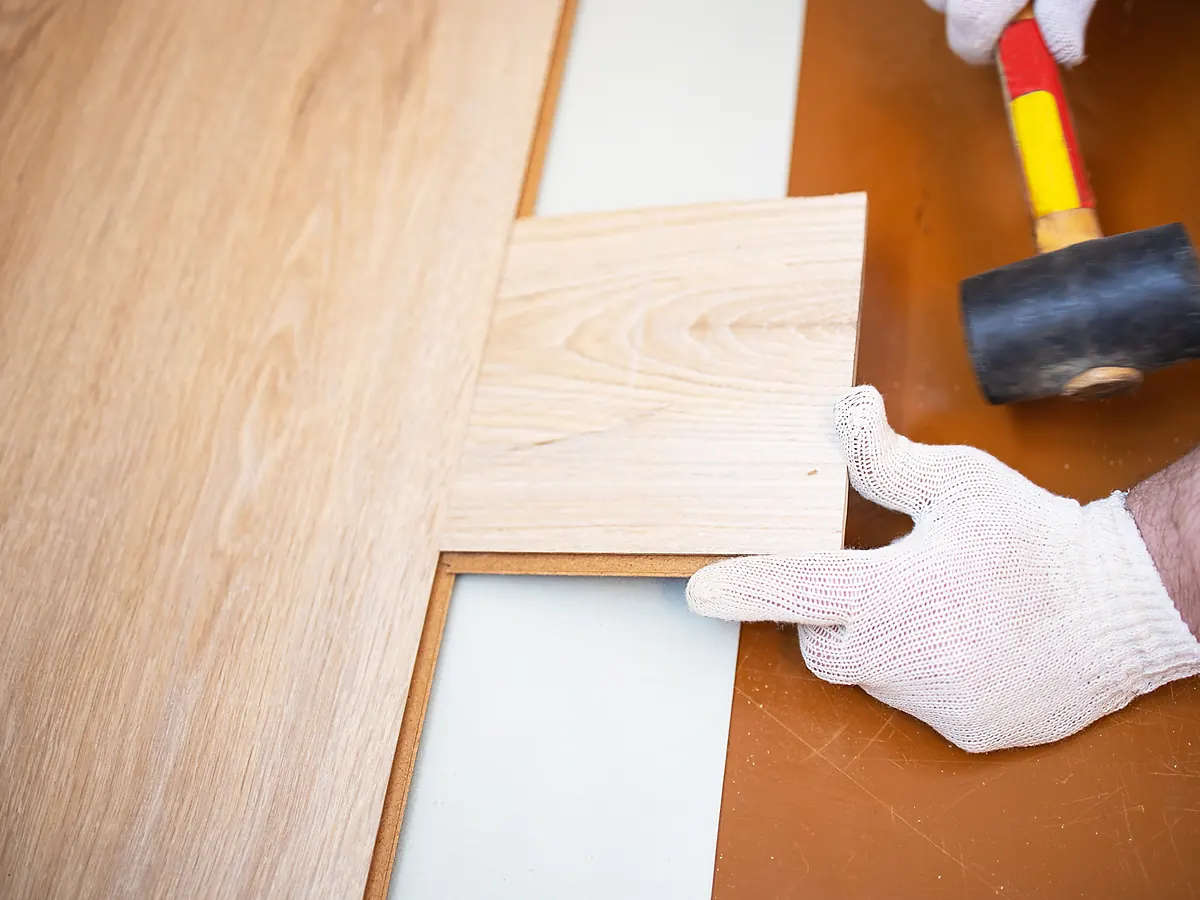
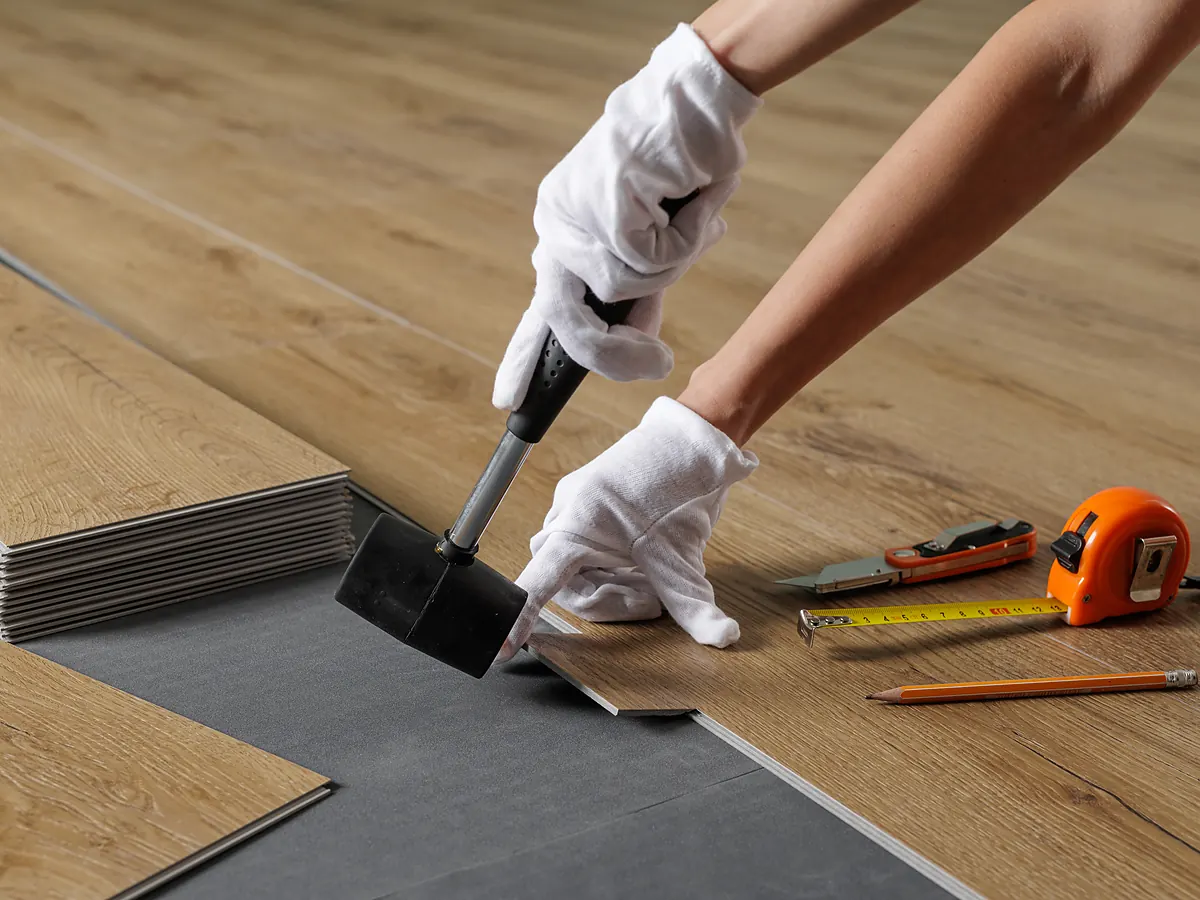
Engineered hardwood plank set over underlayment with a tapping block

Engineered Hardwood

Engineered is a real-wood wear layer over a cross-laminated core. That core keeps it stable, and many engineered products are approved for installation over concrete, below grade, and over compatible radiant-heating systems. The wear layer runs 2 to 6 mm and sets how often it can be sanded.

Factory-finished prefinished hardwood boards and installation tools in a Sioux Falls, SD home

Prefinished Boards

Prefinished boards arrive cured from the mill, so there is no sanding dust and no finish cure schedule. Nail-down and floating prefinished floors can generally be used as soon as installation is complete, while glue-down systems follow the adhesive manufacturer’s return-to-use schedule. Each board carries a small bevel, so the seams stay visible and the color is whatever the catalog offers.

Site-finished hardwood floor sanded flat with tight, bevel-free seams in a bright Sioux Falls, SD room

Site-Finished Floors

Site-finished floors are sanded flat as one plane after installation, which closes the seams and allows any stain color. The cost is days of sanding and cure. New work that has to meet a floor already down is usually what tips the choice.

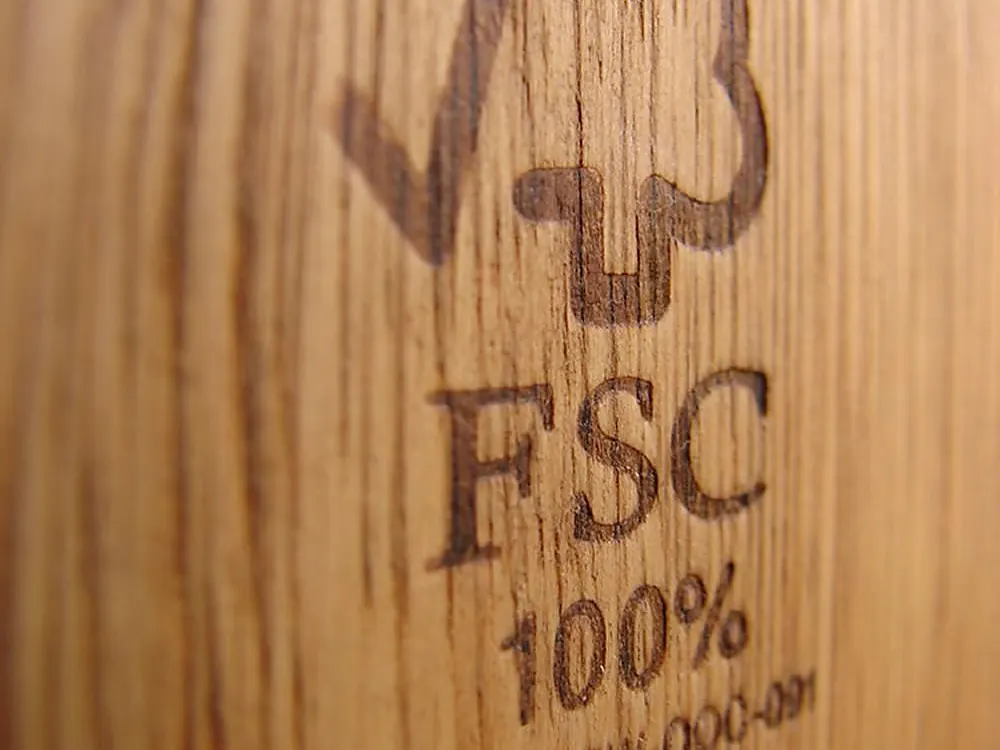
Forest Stewardship Council certification mark branded into a hardwood board

FSC-Certified and Reclaimed Stock

We source FSC-certified hardwood, milled from forests managed to Forest Stewardship Council standards, where a documented chain of custody matters. Reclaimed stock is the other route. It comes from older buildings and barns and may include tight-grained material that is difficult to source new. It can also help us match older widths, profiles, and character.

Hardwood Species We Install in Sioux Falls

How We Match Species to a Room

We match species to traffic on the Janka scale, which rates dent resistance. Hardness is not the only route, though: a textured surface hides what a harder species only postpones.

What Sioux Falls Homes Choose Most

Light and mid-tone finishes are popular choices, and matte and satin finishes are frequently selected. In newer developments toward the south and west, wide-plank engineered flooring is a common choice.

Janka hardness by species and room
SpeciesJanka hardnessBest suited to
Hickory1,820Entries, mudrooms, homes with dogs
Hard maple1,450Kitchens and busy hallways
White oak1,360Whole-house; most requested here
Red oak1,290Whole-house; easiest to match on repairs
Black walnut1,010Bedrooms and low-traffic rooms

Grain, Grade, and Texture

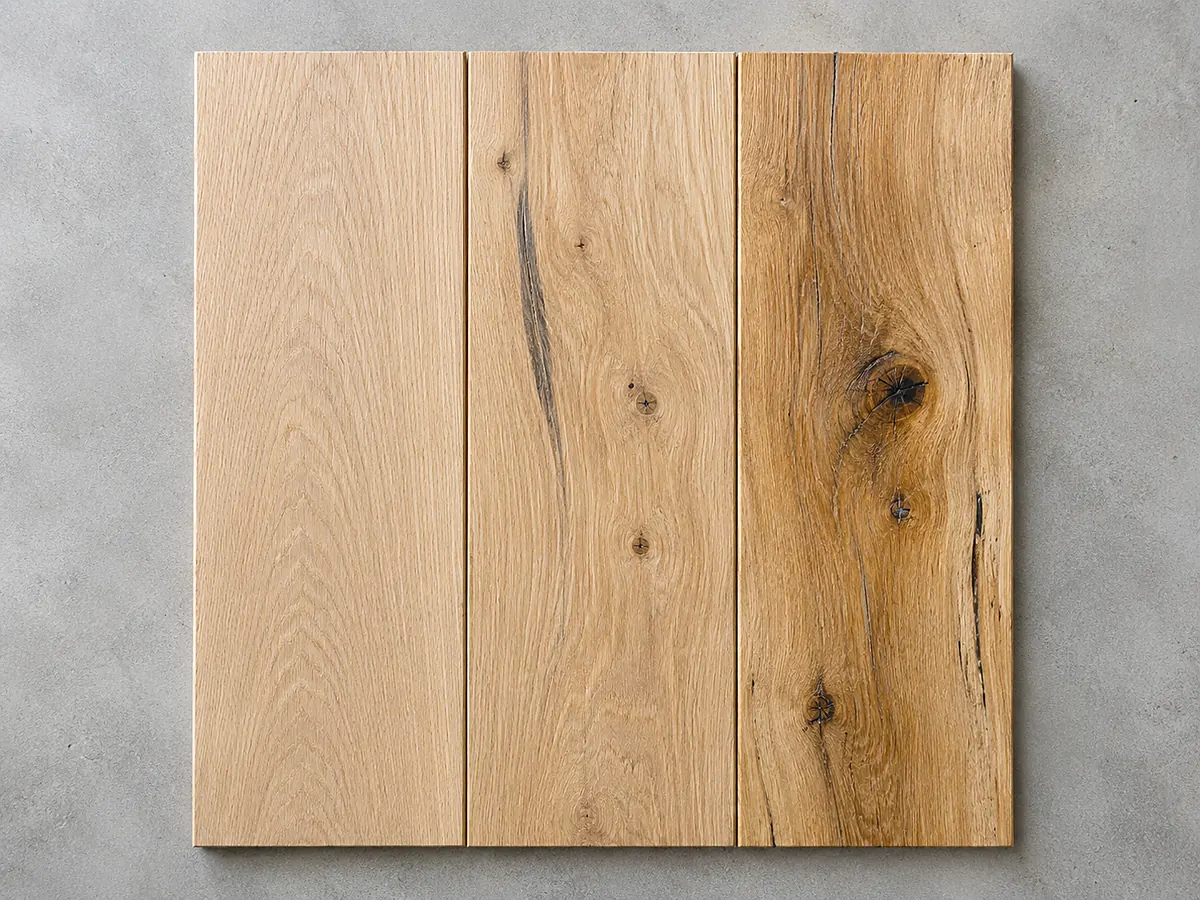
Once the species is settled, three things decide how the floor reads and how well it wears: how the log was cut, what grade the boards run to, and what texture is worked into the surface.

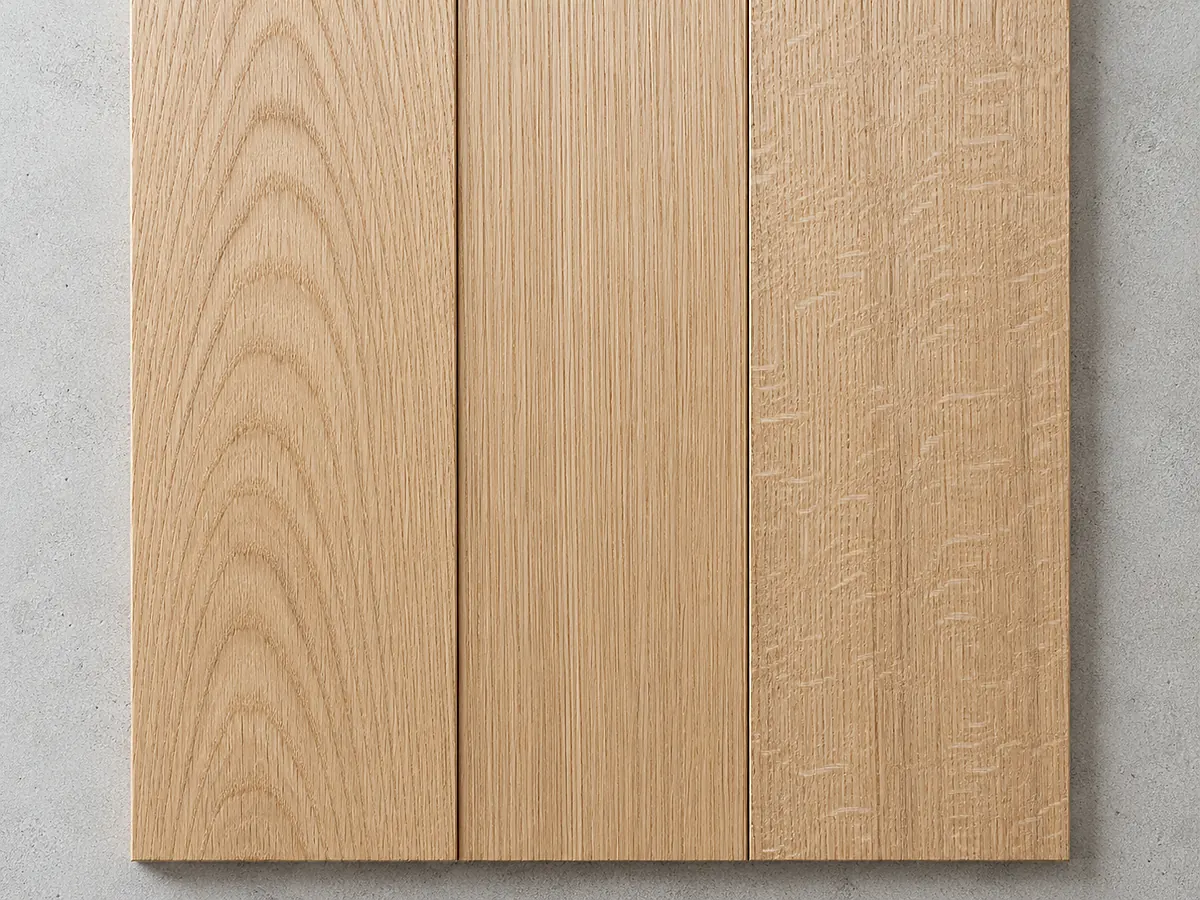
Plainsawn, riftsawn, and quartersawn white oak boards side by side, showing how the cut changes the grain

Cut and Width Decide How Much a Floor Moves

Plainsawn is the common flat cut; riftsawn and quartersawn come from nearer the log’s center, so the grain runs closer to vertical. That is why quartersawn moves about half as much across its width as plainsawn. Width compounds the movement: a 5-inch board changes more at each seam than a 3-inch board in the same house. Three inches is also where the trade names split, strip below it and plank at or above.

Select and Better, #1 Common with mineral streak, and character grade oak boards side by side

Grade

Grade describes appearance, not strength: the same species at the same hardness throughout. Select and better runs uniform with few knots and long boards; #1 Common takes moderate variation and mineral streak; #2 Common, sold as character grade, carries knots and shorter boards for less.

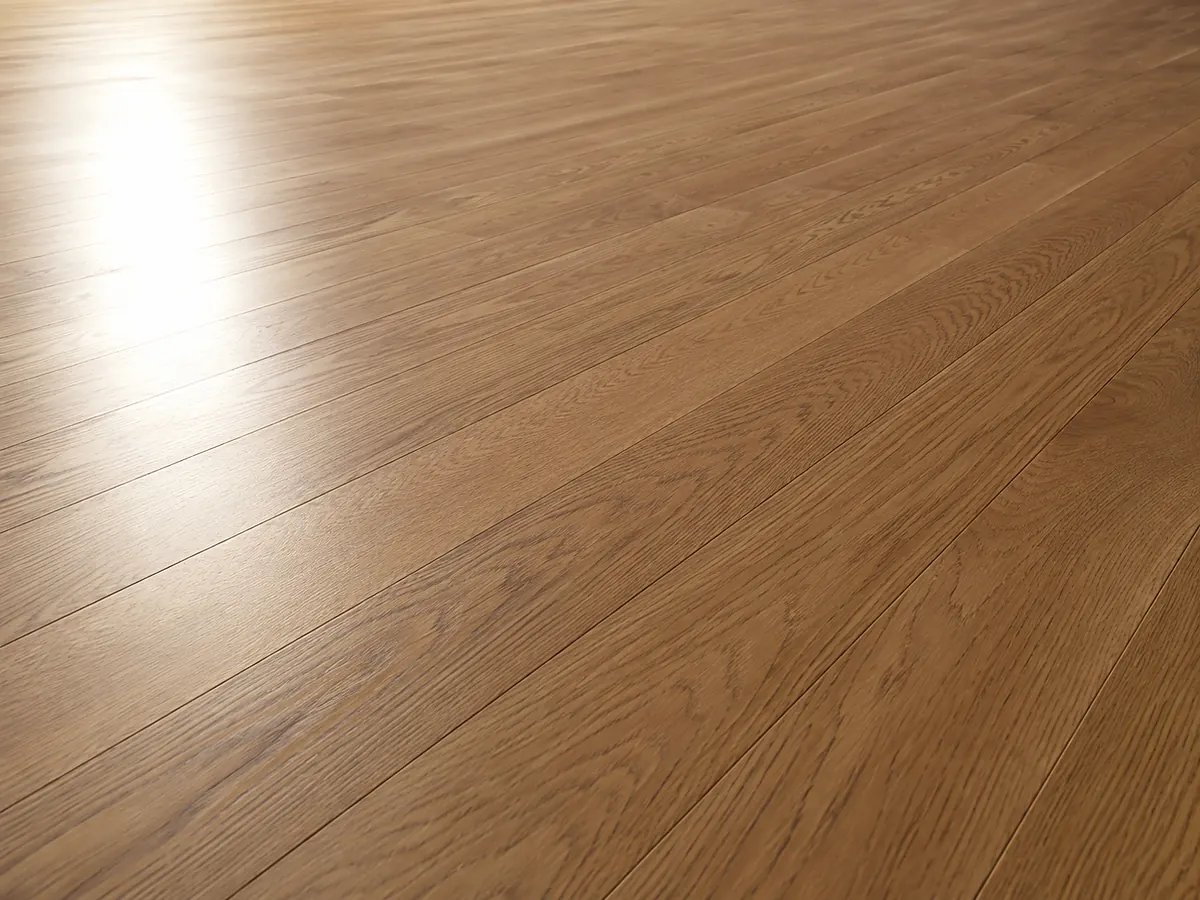
Smooth-sanded oak floor under raking light, flat with no surface relief

Smooth

Sanded flat and left flat, which is what most people picture when they picture a wood floor. It shows every scratch, so it suits low-traffic rooms and houses without pets.

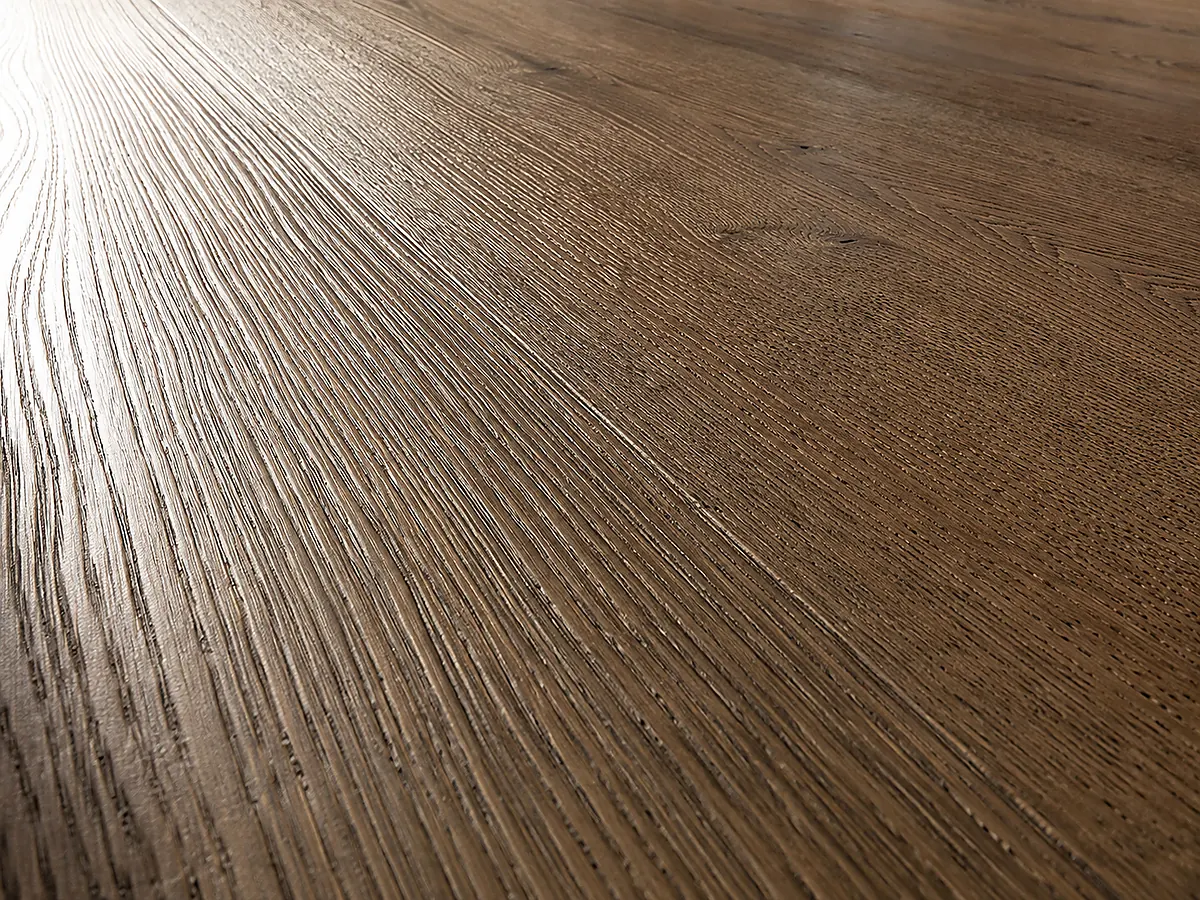
Wire-brushed oak floor with the softer early wood brushed out into grooves along the grain

Wire-Brushed

A wire brush strips the softer early wood and leaves a shallow relief that hides fine scratches. This is what we steer entries and mudrooms toward.

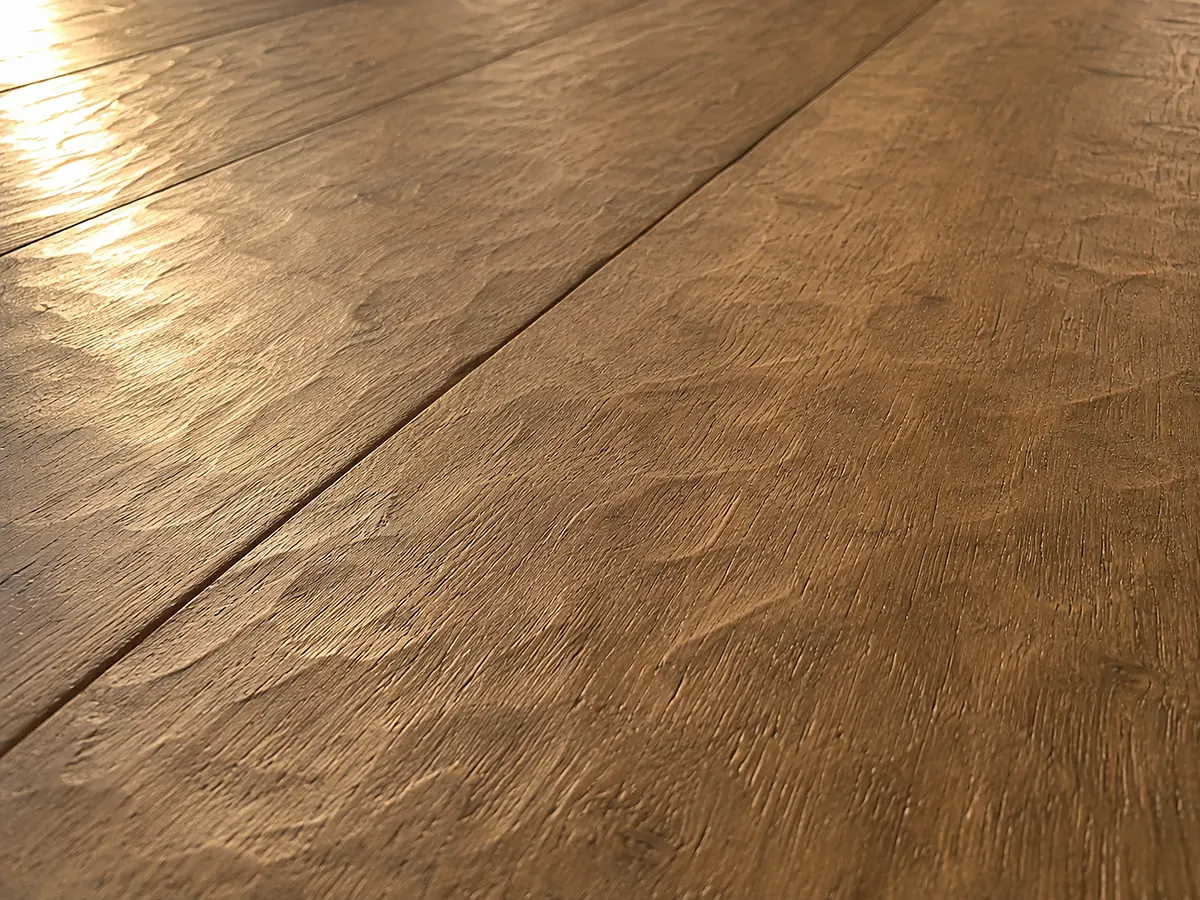
Hand-scraped oak floor with irregular shallow undulations across the board face

Hand-Scraped

Scraped by hand for an undulating surface that reads rustic and older than it is. It hides wear the way wire-brushing does, and holds a little more dust in the grain.

Commercial Flooring Across the Sioux Falls Metro

Commercial floors have to be ready when customers and staff come back, so the calendar shapes the specification as much as the floor does. We phase work after hours and over weekends, at no added charge for the hours.

New Commercial Flooring Installation

We install for offices, retail, clinics, and restaurants across the metro. Species are matched to expected traffic by Janka hardness, and sheen is chosen for how much scuffing a room will show. Work is sequenced by zone so a business keeps trading while the floor goes in.

After-Hours Refinishing and Return to Service

With a compatible fast-cure finish and suitable site conditions, a Friday start may allow reopening by Monday. We release areas as each one clears rather than handing the whole building back at the end.

Downtown and Historic Storefront Floors

Phillips Avenue and the blocks around it are full of century commercial buildings, and the original maple or oak is often still there under later coverings. We work those floors in stages around trading and dining hours, so a storefront does not have to close for the duration of the work.

Other Flooring We Install: Tile, Vinyl Plank, and Laminate

Some rooms belong on tile, LVP, or laminate rather than wood, and we install all three with the same substrate work that decides how long a floor lasts.

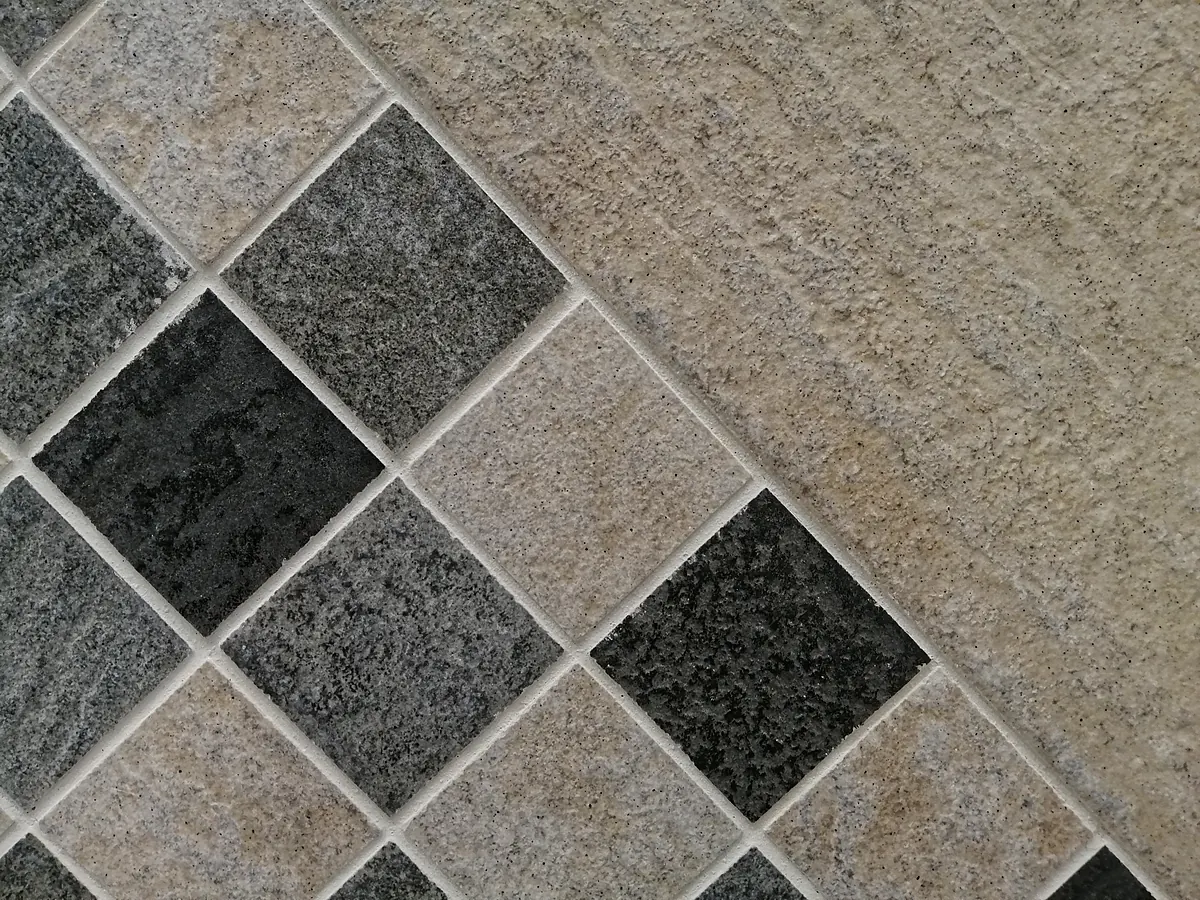
Wood-look porcelain tile set with leveling clips in a Sioux Falls, SD home

Tile Flooring Installation

Tile depends on a stable base, because movement in the subfloor cracks tile and grout. We set porcelain, ceramic, and natural stone to ANSI A108, over cement backer board or an uncoupling membrane that helps isolate the finished tile from minor movement below.

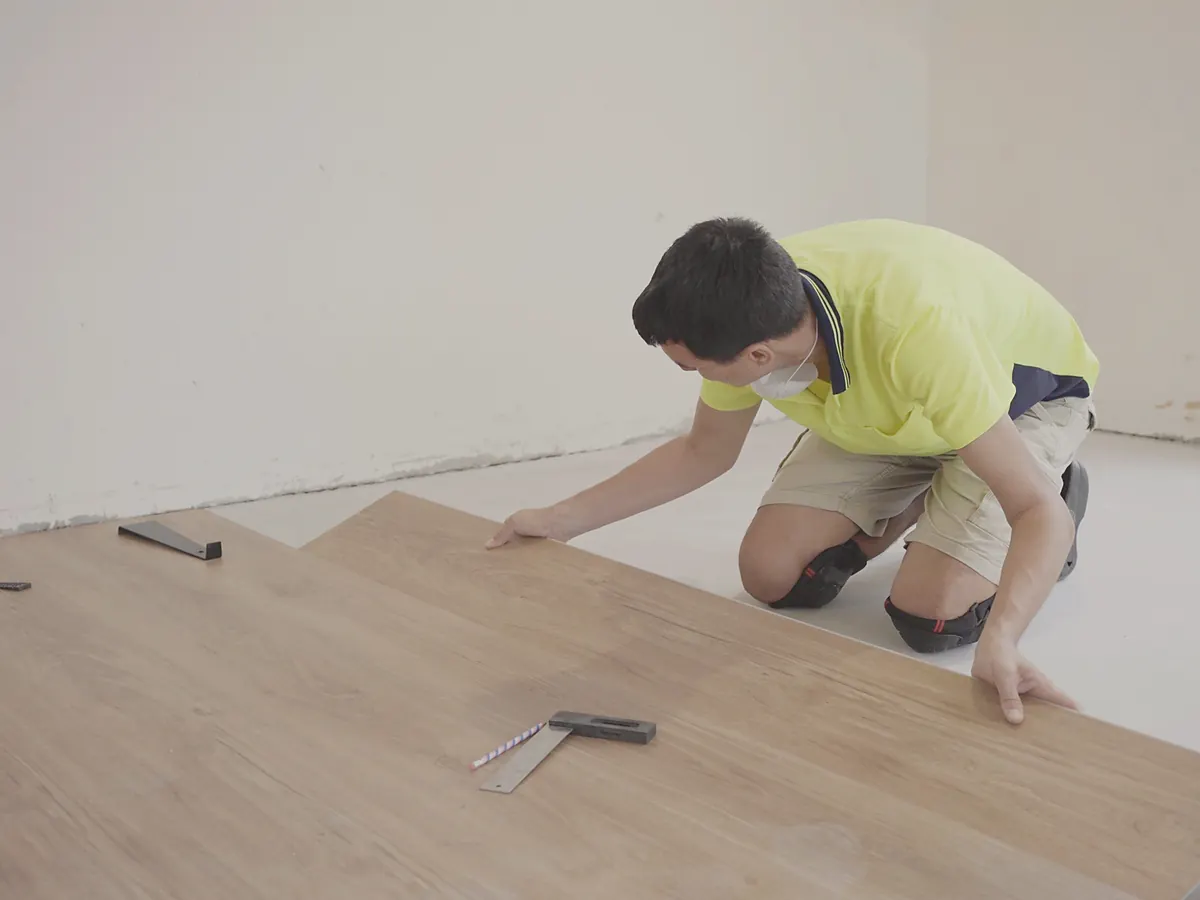
Waterproof luxury vinyl plank laid over foam underlayment in a Sioux Falls, SD lower level

Luxury Vinyl Plank Flooring Installation

Luxury vinyl plank is waterproof, which makes it the safer specification for lower levels and wet rooms where wood carries risk. Its SPC core, a rigid stone-plastic blend, resists dents and holds the plank flat. We look for a 20-mil wear layer in busy homes and rentals.

Installer fitting AC4-rated laminate flooring planks in a Sioux Falls, SD home

Laminate Flooring Installation

Laminate uses an AC abrasion rating for wear resistance, and we recommend AC4 or higher for active households. Its high-density fiberboard core floats over the subfloor rather than fastening to it. Unlike vinyl plank, laminate should not meet standing water; the core swells and will not recover.

What Flooring Costs in Sioux Falls: Published Rates and Price Factors

These are our published Sioux Falls rates, so you can check any proposal against them. Where a job lands inside a range comes down to the material, the condition of the room, and how much prep the floor needs first.

What Flooring Installation Costs

  • Solid hardwood — $8 to $16 per sq ft installed. Set by species, plank width, and prefinished versus site-finished material. Moisture testing, acclimation, and cleanup are included.
  • Engineered hardwood — $7 to $13 per sq ft. Set by wear-layer thickness and whether the floor is glued, nailed, or floated. Substrate preparation and the moisture barrier are included.
  • Luxury vinyl plank — $4 to $8 per sq ft including underlayment. Most rooms take 1 to 2 days with no finish cure time.
  • Laminate — $4 to $9 per sq ft. Based on plank thickness and AC wear rating. Underlayment, transitions, and trim are included.
  • Tile — $9 to $18 per sq ft. Covers substrate preparation, backer board, setting, grout, and sealing.
  • Custom herringbone or chevron — $12 to $22 per sq ft including layout set-out.
  • Stair treads and risers — $100 to $225 per step.
  • Commercial installation — $10 to $19 per sq ft, with after-hours scheduling at no added charge.

What Refinishing and Repairs Cost

  • Screen and recoat — $1.50 to $3 per sq ft. No sanding and no color change.
  • Standard refinish — $3 to $5 per sq ft. Sanding and two coats in the wood’s natural color.
  • Refinish with custom stain color — $5 to $7 per sq ft. When the sanding and the stain are quoted together. Dust containment is standard, not an upcharge.
  • Adding stain to a refinish already quoted at the standard rate — $1 to $3 per sq ft.
  • Hardwax-oil finish upgrade — adds $2 to $4 per sq ft.
  • Stair refinishing — $40 to $75 per step.
  • Full restoration — $6 to $11 per sq ft, including subfloor work.
  • Single-board replacement — $125 to $350 per board.
  • Squeak repair — $65 to $135 per board.
  • Gap filling — $2 to $4 per linear foot.
  • Commercial refinishing — $5 to $7 per sq ft, with a 24-hour return to service.

What moves your price: Tack-strip carpet removal and haul-away is $1 to $2 per sq ft. Glued-down flooring removal runs $1.50 to $4 per sq ft, because crews must take the remaining adhesive off the subfloor. Staple pulling, patching, and other subfloor preparation adds $0.50 to $2 per sq ft. Damaged subfloor panel replacement is $2.50 to $5 per sq ft.

A small-job minimum applies under roughly 200 square feet, since setup and mobilization stay the same. Stairs, closets, and rooms with many cuts carry a higher rate than open areas. Furniture moving and appliance disconnects are priced separately.

For a free consultation, call (605) 799-9142, or use the quote form to request a fixed-price itemized proposal for your rooms.

Warm oak hardwood floor in a light-filled Sioux Falls, SD bedroom Wide-plank hardwood floor in an open living space with exposed brick Hardwood floor running through an open-plan kitchen and living room in Sioux Falls, SD Glossy dark hardwood floor in a Sioux Falls, SD bedroom

How Working With Us Goes, From First Call to Final Walkthrough

From the first visit through final walkthrough sign-off, Sioux Falls Hardwood Flooring works to a schedule you can see.

  1. 1.

    Call or Request an Estimate

    We book a free estimate, usually within a few days. During the on-site measure we record room dimensions, inspect the subfloor, and assess the existing flooring.

  2. 2.

    See Samples in Your Own Rooms

    We leave the sample boards in the room they are meant for, so you can compare species, finish, and stain in your own daylight and lamplight.

  3. 3.

    Get a Fixed-Price Written Proposal

    You receive an itemized proposal with materials, preparation, removal, and finish shown separately, usually within 24 hours. The proposal defines the included scope and price. Concealed damage and customer-requested changes are documented and approved in writing before any additional work proceeds.

  4. 4.

    Scheduling and Delivery

    Material is delivered about a week ahead so it can settle to the conditions in your house. We confirm the schedule once the readings support the start date.

  5. 5.

    Installation, Walkthrough and Living on It

    Most projects take 1 to 5 days on site. We install containment and clean at each day’s end, and you receive written dates for foot traffic, furniture, and rugs.

Ready to schedule?

Book a free on-site measure today.

Call Now: (605) 799-9142

Caring for Your Wood Floors Through a South Dakota Winter

Two things work against a wood floor here over the winter: dry indoor air, and the grit that comes in on boots. A hygrometer, the small gauge that reads indoor humidity, is the cheapest way to stay ahead of the first.

Winter Gaps Are Normal, Up to a Point

A January average around 18 F and roughly 25 days at or below zero pull most homes under the 30 to 50 percent band. Boards shrink in January and close again by July; a whole-house humidifier reduces the swing. A gap up to roughly 1/16 inch that closes by summer is normal, while gaps that stay open deserve inspection.

Routine Care That Actually Protects the Finish

Sioux Falls gets about 45 inches of snow a year, so a sturdy doormat inside and outside every entrance catches road salt and sand before they reach the wood. Sweep or vacuum on a hard-floor setting before grit scratches the finish. Clean with a lightly damp mop and pH-neutral hardwood cleaner, and avoid wet mops and steam.

Hardwood floor in a Sioux Falls, SD room with snow outside during the dry winter heating season

Wood Flooring in Basements and Below-Grade Sioux Falls Homes

Finished basements are common in Sioux Falls, but wood flooring below grade needs its own specification. Below-grade plank is only as good as the slab reading under it, so we run ASTM F2170 and ASTM F1869, a companion test that measures how much moisture rises off the surface, before specifying anything.

Testing the Slab Before Anything Is Glued to It

Concrete can release moisture long after placement. We set a humidity probe to the depth ASTM F2170 prescribes and give it the 24 hours the standard requires before reading it. Many flooring manufacturers set a 75 percent slab RH ceiling, though product limits govern. A high reading calls for a vapor retarder, a sheet or coating that blocks slab moisture, or a floating floor instead of adhesive.

What Actually Belongs Below Grade

Below-grade rooms call for engineered hardwood. Glue-down works when the test results and the adhesive’s limits agree; a floating install is the alternative when they do not. An insulated subfloor panel separates finished flooring from cold slab temperatures. Where a basement has flooded before, SPC rigid core is the safer choice.

Engineered hardwood set into adhesive on a tested concrete slab for a below-grade Sioux Falls, SD room

Hardwood Flooring Across Sioux Falls and the Surrounding Communities

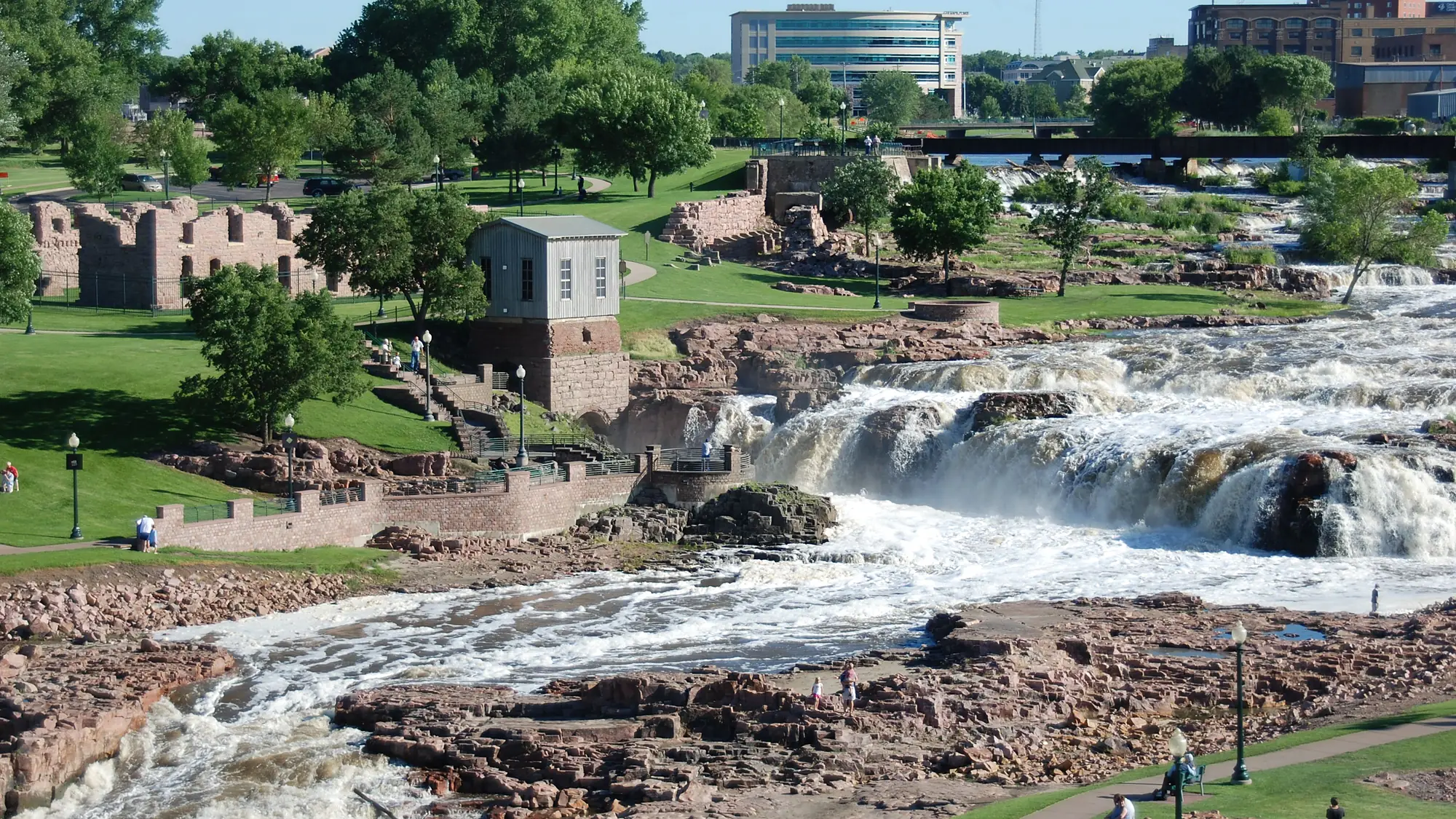
Sioux Falls housing stock splits roughly in two, and the halves ask for different work. In the established neighborhoods, including McKennan Park, All Saints, Tuthill Park, and the older grid running out toward Falls Park and the Old Minnehaha County Courthouse, the floor under the carpet often contains narrow oak strip flooring. Typically 2 1/4 inch for houses of that era, red or white, nailed tight and finished in place, and many of these floors are candidates for restoration.

What makes those floors difficult is rarely the sanding. It is the sourcing. When boards are missing we have to match flooring milled decades ago, the same species, width and cut, much of it long discontinued, then work it into the existing run so the repair does not read as a patch.

On the south and west edges the houses are new and the boards are wide: 5- and 7-inch plank, much of it engineered and factory-finished. That width shows at the seams, sooner in a new floor than in an old strip floor. Many Sioux Falls homes include finished or unfinished lower levels, which means a slab to read first. Across a metro of roughly 290,000 people, growth in Minnehaha and Lincoln Counties keeps all of it active.

Sioux Falls Neighborhoods

  • McKennan Park
  • All Saints
  • Cathedral Historic District
  • Pettigrew Heights
  • Sherman Historic District
  • Whittier
  • Tuthill Park
  • Downtown Sioux Falls

Surrounding Communities

  • Brandon
  • Harrisburg
  • Tea
  • Hartford
  • Dell Rapids
  • Lennox
  • Canton
  • Crooks
  • Baltic
  • Worthing
  • Valley Springs
  • Garretson
  • Humboldt
  • Colton
  • Renner
  • Chancellor

What Our Sioux Falls Customers Say

Hardwood Flooring Questions We Get Asked in Sioux Falls

How Much Does It Cost to Install 1,000 Square Feet of Hardwood Flooring?

Solid hardwood installation costs about $8,000 to $16,000 for 1,000 square feet at $8 to $16 per square foot. Engineered usually costs less, and removing existing carpet adds $1 to $2 per square foot.

Can You Install Hardwood Directly on a Concrete Slab?

Engineered hardwood can go over concrete with a glue-down or floating system. Solid cannot be fastened to a slab directly; it needs a wood subfloor built over one first, and never below grade.

How Long Does Refinishing Take?

Sanding and coating a typical floor takes 2 to 4 days. After the last coat, a two-component waterborne finish generally allows sock traffic at about 24 hours; oil-modified polyurethane needs closer to 48.

Can We Stay in the House While the Floors Are Done?

Usually. We set containment and phase the project room by room so part of the house remains usable. Kitchens and single-bathroom homes are scheduled carefully, and finished rooms stay closed through cure time.

Should We Refinish or Replace the Floor?

Refinish while there is still wood above the tongue to sand, which we measure first. Replacement is the call when a floor has been sanded too thin or damage runs into the subfloor.

Do You Provide Written Estimates and Warranties?

On-site estimates are free and come back as an itemized, fixed-price proposal. Coverage and bonding are in place, with documentation on request. The flooring and finish products carry their manufacturers’ own warranties.

How Long Will a Hardwood Floor Last?

A maintained solid floor commonly runs 40 to 70 years on a 7-to-10-year refinish cycle. Engineered depends on its wear layer. Luxury vinyl plank is durable but cannot be refinished.

How Do You Match Boards on an Older Floor?

We match species, cut, width, and grain, then lace the new boards in with irregular end joints and carry the finish wall to wall so the repair does not read as a patch.

Do You Move Furniture and Appliances?

We do, and we price furniture moving and appliance disconnects separately so they appear as their own line on the proposal.

Dark walnut-toned hardwood floor in an empty Sioux Falls, SD room Light plank hardwood floor in a spacious Sioux Falls, SD living room Golden oak hardwood floor running through a Sioux Falls, SD loft space Installer tapping a hardwood board into troweled adhesive in Sioux Falls, SD

Get a Free Estimate on Your Floors

We will visit your property in Sioux Falls or a surrounding community, measure each room at no charge, and prepare an itemized, fixed-price proposal based on the agreed scope.

Reach us at (605) 799-9142 to talk through your project, or send us the quote form when it suits you.